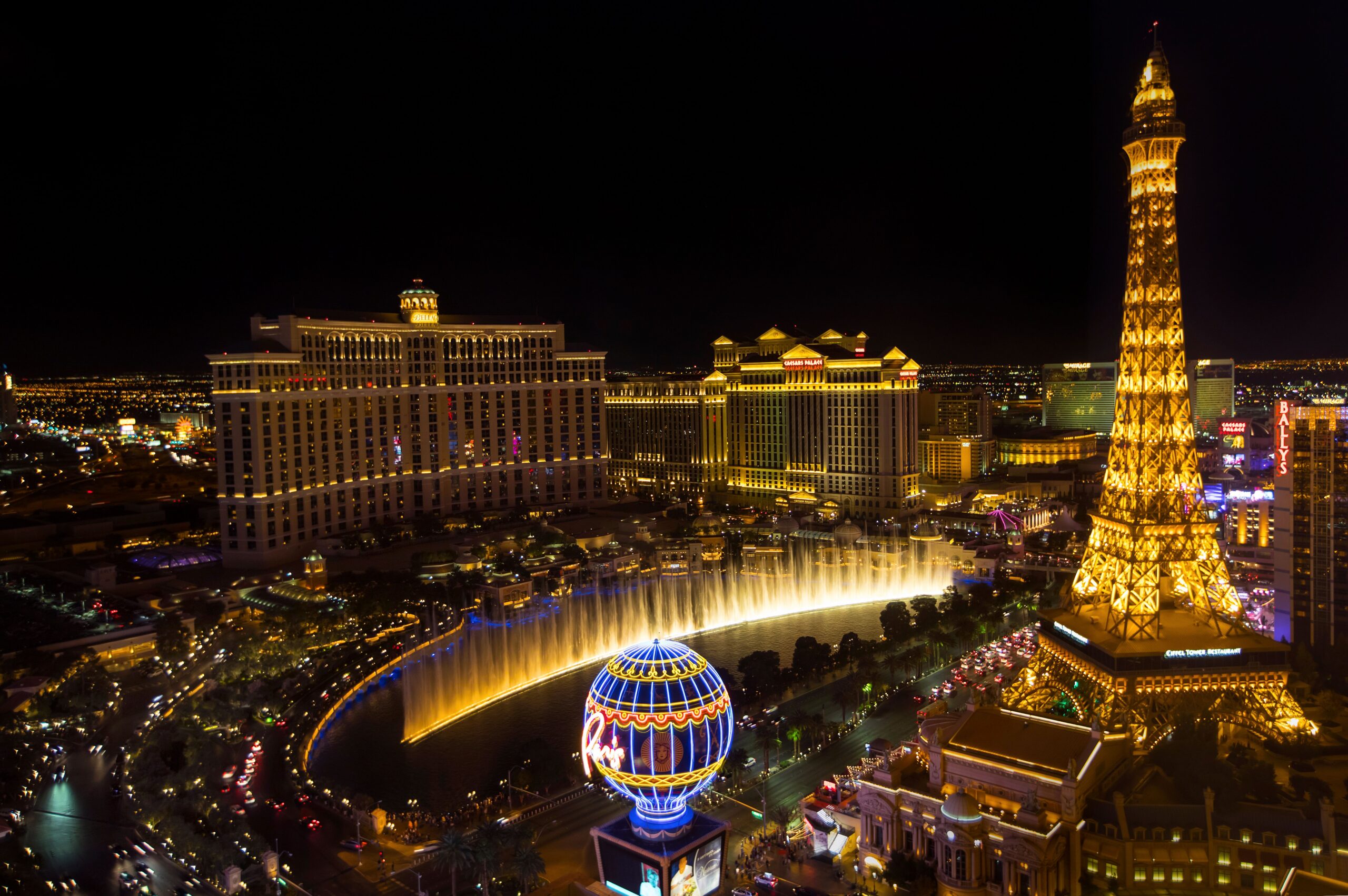
Las Vegas, Nevada
Las Vegas was built to be temporary. The casinos that defined it in the 1950s were designed to be demolished and replaced when something better came along. The desert city that emerged from that philosophy — rebuilt every decade, always chasing a newer version of excess — is one of the most genuinely strange places in America, and one of the most misunderstood.
Most visitors miss that Las Vegas is not just the Strip. World-class restaurants are run by chefs who've made it their permanent home. The Spring Mountains rise twenty minutes west with 11,000-foot peaks and ponderosa pine forests. And the desert geography — the silence of Red Rock Canyon a short drive from the Strip — provides a genuine counterweight to the spectacle. The city runs on a 24-hour clock, which means there's no wrong time to arrive, and the casino floor is a social environment built for strangers — Las Vegas is more solo-friendly than most visitors expect.
Your 48 Hours
| Day One — Red Rock Canyon · The Strip · Fremont Street · Old Vegas | |
| 6:30 AM | Red Rock Canyon National Conservation Area 17 miles west of the Strip — 3,000-foot red sandstone escarpments, Jurassic-era geology, and a 13-mile scenic drive completed before the heat builds. Entry $15 per vehicle. Arrive at opening and drive the one-way scenic loop before the tour buses — the early light on the red rock face is the best photography window of the day. |
| 10:30 AM | The Neon Museum The outdoor "Boneyard" of decommissioned casino and hotel signs, spanning six decades of Las Vegas history — the best place to understand what the city actually is: constant demolition and reinvention. General admission $25. The self-guided daytime tour gives the best photography light for the unrestored signs; the night tour requires advance booking but shows the restored signs against a dark sky. |
| 12:30 PM | Lunch: Wicked Spoon, The Cosmopolitan The best buffet on the Strip — individual portion servings, serious kitchen technique, a rotating selection of smoked meats and raw bar. $40–50, an ideal solo dining format. Take a plate, take a seat, go back as many times as makes sense — no table to manage, no pace to match. |
| 2:00 PM | Walking the Strip: Bellagio to The Venetian The central Strip corridor as a series of architectural experiences connected by walkways and casino floors. The Bellagio conservatory changes seasonally and is free; the High Roller wheel shows how the Strip relates to the surrounding desert. Watch the Bellagio fountains from the free lakeside promenade, or the sidewalk directly across Las Vegas Boulevard — not from inside the casino. |
| 4:30 PM | The Arts District (18b) Between Charleston Boulevard and Wyoming Avenue — the city's actual arts community: independent galleries, murals, coffee shops, and the Container Park. If your visit lands on a First Friday, this becomes two hours instead of one — vendors and live music fill the streets. |
| 7:00 PM | Dinner: Carbone, The Aria The Las Vegas outpost of the New York original — theatrical Italian-American red sauce dining. Bar seats available. $80–100. Reserve at exploretock.com. The spicy rigatoni vodka and tableside veal parmesan are the two dishes worth building the reservation around. |
| 9:30 PM | Fremont Street Experience The original Las Vegas casino district, now covered by a 1,500-foot LED canopy running light shows hourly after dark. Smaller, cheaper, more historically interesting casinos than the Strip. Fremont East — The Griffin, Park on Fremont, Commonwealth — has the best bar scene in the city for anyone not chasing a casino-hotel bar. |
| Day Two — Valley of Fire · Atomic Age · Evening on the Strip | |
| 7:00 AM | Valley of Fire State Park 55 miles northeast — Nevada's oldest state park, 40,000 acres of Aztec sandstone that turns the color of live coals in morning light. Entry $10; three hours round trip from the Strip. The Fire Wave trail is the most photographed formation in the park — best before 9am, and bring two liters of water minimum regardless of season. |
| 11:30 AM | The National Atomic Testing Museum The Smithsonian-affiliated museum covering 928 above-ground nuclear tests conducted in the Nevada desert between 1951 and 1992 — the museum that explains why Las Vegas developed the way it did. $22. The blast door theater experience is the centerpiece — don't skip it for the exhibit halls alone. |
| 1:30 PM | Lunch: Secret Pizza, The Cosmopolitan Level 3 mezzanine, unsignposted, reached by a corridor behind the elevators — New York-style pizza by the slice, $4–6, cash preferred. A modest pizza counter inside a $4 billion resort is exactly the kind of Las Vegas joke worth experiencing firsthand. |
| 3:00 PM | High Roller & The LINQ Promenade The largest Ferris wheel in the world — the most complete spatial understanding of Las Vegas available to a visitor, with the Spring Mountains visible west and desert valleys in every direction. $25 day / $35 evening. One rotation takes 30 minutes — walk the LINQ Promenade below either before or after. |
| 5:00 PM | The Mob Museum Downtown, in the former federal courthouse where the 1950 Kefauver Committee hearings were held — three floors of organized crime history and a basement Prohibition-era cocktail distillery. $32. One of the best museums in Las Vegas — allow ninety minutes minimum, and don't skip the basement bar. |
| 7:30 PM | Dinner: Marigold, The Venetian Shota Nakajima's modern Japanese omakase-influenced restaurant — the top-rated dining destination on the Strip in 2024–25. Chef's counter seats for solo diners. $90–120. Reserve months ahead. The seasonal, technique-driven menu makes the reservation lead time worth planning around before you book flights. |
| 10:00 PM | The Strip After Dark Las Vegas at night from the pedestrian sidewalk is its own experience — the Bellagio fountains until 1am, the density of light along the boulevard. Walk south from The Venetian to the Bellagio for the full Strip experience — the casino floor there at 11pm on a Friday is one of the stranger social environments in America. |
Las Vegas's Table
Is Las Vegas Safe?
| Area | Rating | Notes |
|---|---|---|
| Red Rock Canyon | ★★★★★ | Managed park, well-maintained trails. Heat is the only genuine hazard. |
| Valley of Fire | ★★★★★ | State-managed, remote, beautiful — go prepared for heat and distance. |
| The Strip (Bellagio to Venetian) | ★★★★☆ | Heavy security presence, well-lit, monitored 24 hours. Watch for pickpockets in crowds. |
| Fremont Street Experience | ★★★★☆ | Well-managed and active at all hours; the canopy zone itself is safe. |
| The Arts District (18b) | ★★★★☆ | Active during gallery and event hours. |
| Strip Side Streets / Downtown East | ★★★☆☆ | Transition quickly from managed to unmanaged — stick to main pedestrian corridors. |
When to Visit
Navigating Las Vegas
| Uber / Lyft | Varies | Most reliable for Red Rock, Valley of Fire, and the airport. Surge pricing weekend nights. |
| Walking | Free | The Strip is walkable north-south; use the elevated walkways between properties. |
| Rental Car | $40–80/day | Essential for Red Rock Canyon and Valley of Fire — book at the airport, drive early to beat heat. |
| Monorail | $6/ride | Runs the east side of the Strip, 7 stations — useful for mid-Strip movement. |