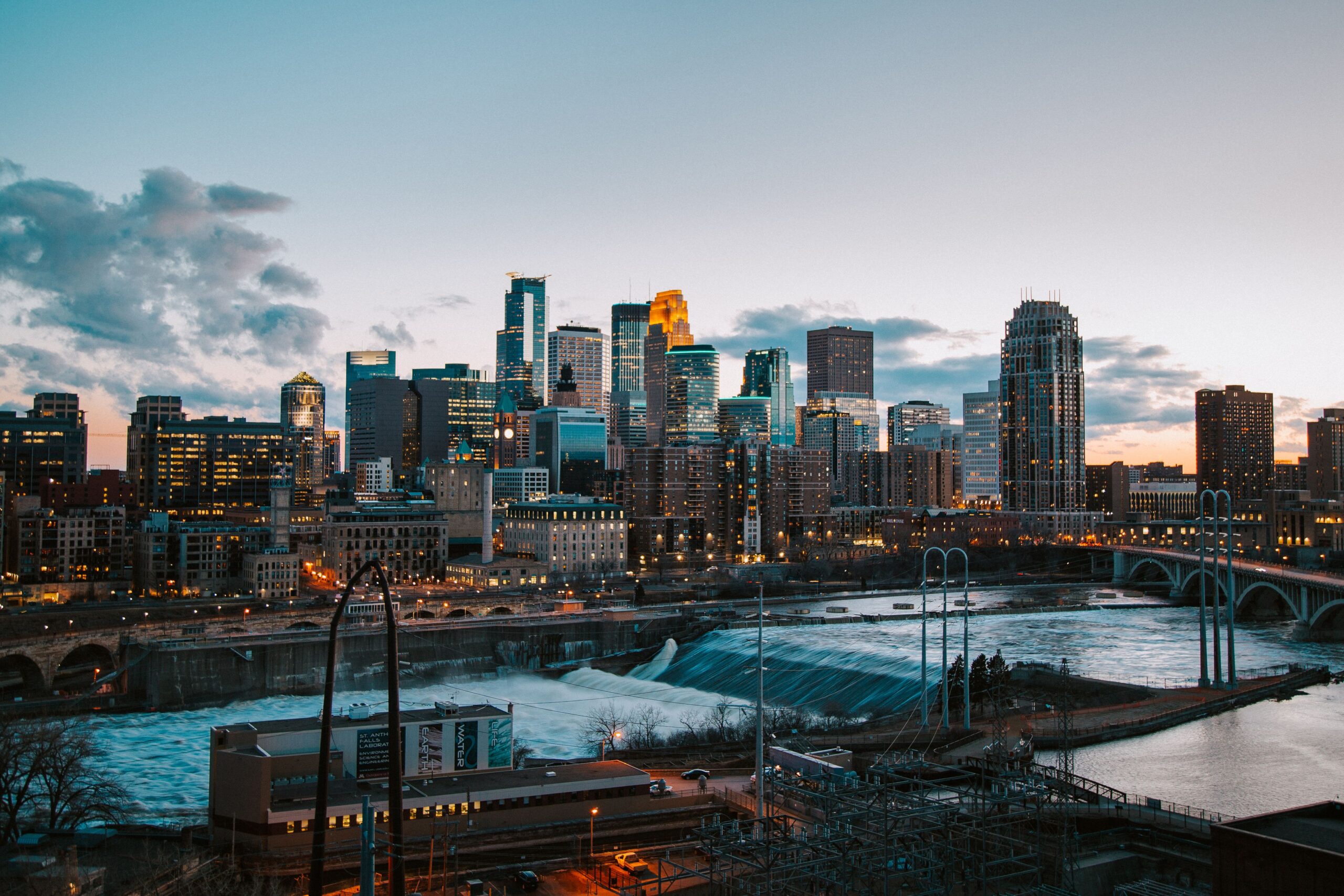
Minneapolis, Minnesota
Minneapolis is the city that figured out winter. The Skyway System — 80 blocks of enclosed pedestrian walkways linking downtown buildings — and a year-round outdoor culture built around frozen lakes and groomed ski trails are the product of a city that decided to work with its climate rather than apologize for it. Minneapolis has the highest concentration of theater seats per capita in the US after New York, and the Walker Art Center is one of the finest contemporary art museums in the country.
The city is designed for solo exploration. The Chain of Lakes — six interconnected lakes with 13 miles of surrounding parkland — creates an outdoor environment that works year-round, and the music culture is embedded in the bars and venues that are still active: Minneapolis produced Prince, The Replacements, Husker Du, and Lizzo in four decades.
Your 48 Hours
| Day One — Chain of Lakes · Walker Art Center · Northeast · First Avenue | |
| 8:00 AM | Chain of Lakes: Lake of the Isles & Bde Maka Ska Six interconnected lakes with 13 miles of paved trail — the finest urban park system in the Upper Midwest. Free; open daily. The early-morning view across Lake of the Isles toward the skyline, from the east bank, is one of the defining images of the city. |
| 10:00 AM | Walker Art Center & Sculpture Garden One of the finest contemporary art museums in the US. The adjacent Sculpture Garden, free and open daily, has 40 outdoor works including Spoonbridge and Cherry (Claes Oldenburg, 1988). $15; free first Saturdays. Spoonbridge and Cherry is the most photographed artwork in Minnesota — go early morning for the best light. |
| 12:30 PM | Lunch: Northeast Minneapolis A walkable corridor of breweries, galleries, and restaurants in converted industrial buildings. Young Joni for wood-fired pizza and natural wine is the benchmark. Hai Hai for Southeast Asian street food is the alternative if pizza doesn't call. |
| 2:00 PM | Minneapolis Institute of Art (Mia) 90,000 works spanning 5,000 years, free admission — remarkable holdings in Asian art, European paintings (Rembrandt, Monet, Van Gogh), and American art. Free and undervisited — the Japanese, Chinese, and Korean galleries are exceptional. Allow two hours minimum. |
| 4:30 PM | Northeast Minneapolis: Brewery Walk The highest concentration of craft breweries in Minnesota — Bauhaus Brew Labs, Indeed Brewing, and Fair State Brewing Cooperative are all within walking distance. A Friday afternoon brewery walk here is the most social solo activity in the city. |
| 7:00 PM | Dinner: Spoon and Stable Gavin Kaysen's French-influenced, Minnesota-sourced restaurant in a converted North Loop stable — the best restaurant in Minneapolis. Bar seat: $75–95. Reserve at spoonandstable.com. The bar is designed for solo diners — the cooking has been consistently exceptional since opening. |
| 9:00 PM | First Avenue or 7th Street Entry The most historically significant music venue in Minneapolis — where Prince filmed Purple Rain in 1983. Check the calendar at first-avenue.com. Study the 500+-star "hometown heroes" wall outside before the show — Prince's star is on the northeast corner. |
| Day Two — Stone Arch Bridge · Mill City · Global Market · Uptown | |
| 8:00 AM | Stone Arch Bridge & Mill Ruins Park The 1883 railroad bridge across the Mississippi, spanning St Anthony Falls, the only natural waterfall on the river. Mill Ruins Park below preserves the stone foundations of the mills that made Minneapolis the flour-milling capital of the world. The Guthrie Theater's free "Endless Bridge" observation deck, cantilevered over the Mississippi, has the finest river view in the city. |
| 10:00 AM | Mill City Museum Built into the ruins of the Washburn A Mill — the Flour Tower exhibit, a glass elevator in the original mill tower, is the centerpiece. $15. The most architecturally dramatic space in Minneapolis. |
| 12:00 PM | Lunch: Midtown Global Market 50+ vendors in a former Sears warehouse — Somali, Mexican, Hmong, Ethiopian, Latin American food. The most genuinely diverse food market in the Midwest. Under $15. The Somali tea stalls are the least tourist-facing and most rewarding. |
| 2:00 PM | Uptown & Lake Street Minneapolis's most walkable commercial strip — Magers & Quinn, the finest independent bookshop in the Midwest, anchors the neighborhood. Walk south from the intersection toward Lake Harriet for the quietest stretch. |
| 4:00 PM | Paisley Park (Optional) Prince's studio complex and private concert venue, 20 miles west in Chanhassen — now a museum, exactly as Prince left it. $45; book well in advance at officialpaisleypark.com. The most significant music pilgrimage experience in the Midwest — requires a rental car. |
| 6:30 PM | Dinner: Hai Hai or Young Joni Hai Hai: Christina Nguyen's Southeast Asian street food with a tiki bar program, $40–60. Young Joni: Ann Kim's wood-fired pizza and natural wine. Both among the best in the Midwest. The bar seats at either are designed for solo diners. |
| 9:00 PM | The Turf Club or Amsterdam Bar & Hall The Turf Club: a 1941 dive in St Paul hosting legendary local and touring Americana acts — the most unpretentious music venue in the Twin Cities. Both require an Uber to St Paul — both are worth it. |
Minneapolis's Table
Is Minneapolis Safe?
| Area | Rating | Notes |
|---|---|---|
| North Loop | ★★★★★ | The city's most active and safest neighborhood. |
| Walker Art Center / Kenwood | ★★★★★ | Cultural corridor in an established residential neighborhood — very safe. |
| Chain of Lakes | ★★★★★ | Safe during daylight and early evening; paths well-used. |
| Stone Arch Bridge / Mill District | ★★★★★ | Well-managed public space — safe at all hours during daylight and event hours. |
| Northeast Minneapolis | ★★★★☆ | Arts district and brewery corridor — active and safe during bar hours. |
| Uptown (Hennepin/Lake) | ★★★★☆ | Established commercial neighborhood — active corridor. |
When to Visit
Navigating Minneapolis
| Nice Ride / Lyft Bikes | $3.29/30 min | One of the finest bike-share systems in the US — best on the Chain of Lakes. |
| Metro Transit LRT | $2.50/ride | The Blue Line connects downtown directly to MSP airport. |
| Uber / Lyft | Varies | Essential for Paisley Park (Chanhassen) and the Turf Club (St Paul). |
| Skyway System | Free | 80 blocks of enclosed pedestrian skyways — the most practical winter navigation. |