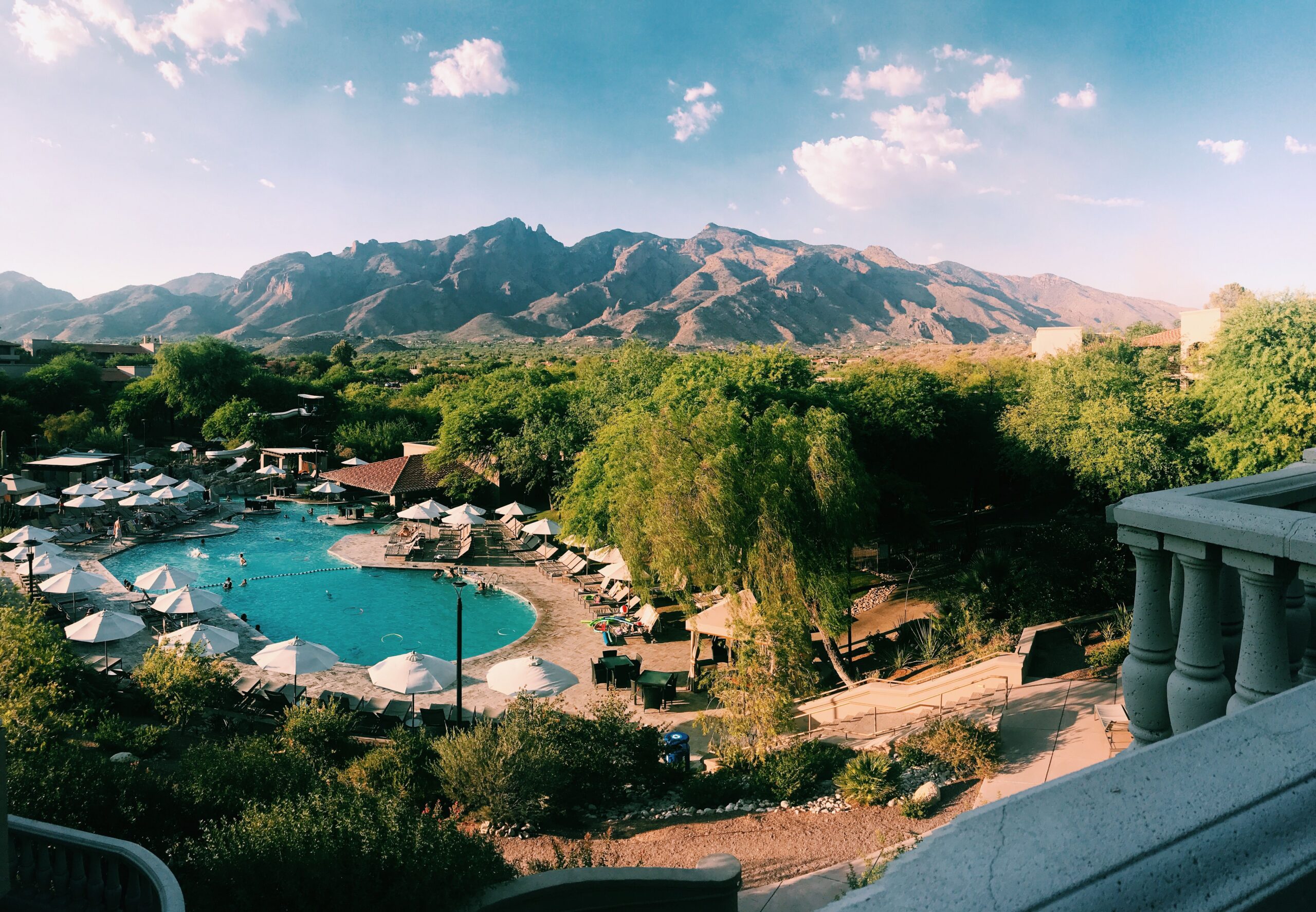
Tucson
Tucson is a city that never tried to be Phoenix, and that refusal is the whole point. While its northern neighbor paved over the desert, Tucson built its ordinances around dark skies, its restaurants around Sonoran heritage, and its identity around the saguaro cactus that grows nowhere else on Earth. In 2015, UNESCO named it a City of Gastronomy — one of only two in the United States — recognizing a food culture built on four centuries of overlapping Indigenous, Spanish, Mexican, and cowboy influence.
What most first-time visitors miss: Tucson is not one desert experience but three. Saguaro National Park splits into east and west districts bookending the city, each with its own character. Sabino Canyon, in the Santa Catalina foothills, is a riparian oasis with year-round water. And Mount Lemmon rises more than 6,000 feet above the valley floor, running from cactus to pine forest along a single 27-mile road.
Tucson rewards solo travel because it is, at heart, an unhurried college town with genuine warmth. The historic Fourth Avenue district was built for wandering alone — independent shops, patio bars, and a streetcar that connects it to downtown and the university without needing a car. And a city serious enough about its night sky to restrict streetlighting is a city built for slowing down.
Your 48 Hours
| DAY ONE · Saguaro West · Mission San Xavier · Barrio Viejo · 4th Avenue | |
| 7:00 AM | Saguaro National Park West 2700 N Kinney Road, 25 minutes from downtown: the denser of the park's two districts, with volcanic hillsides and a forest of saguaros some centuries old. The 6-mile Bajada Loop Drive is unpaved but passable in any car, with pullouts for short walks among the cacti. Entry $25 per vehicle, valid at both districts for a week. Arrive at opening for soft morning light and cool air — by 10am in summer the heat changes the experience entirely. The Signal Hill petroglyph trail (0.5 miles) is the best short walk in the park. |
| 9:30 AM | Arizona-Sonora Desert Museum 2021 N Kinney Road, adjacent to Saguaro West: part zoo, part botanical garden, part natural history museum, almost entirely outdoors. Mountain lions, javelinas, a walk-in aviary, and the best introduction to Sonoran Desert ecology anywhere. Plan on two to three hours. Admission $33. Go early — the animals are most active before 10am and the desert sun is still manageable. The hummingbird aviary and the underground cave exhibit are both worth building extra time around. |
| DAY ONE · Afternoon & Evening | |
| 12:30 PM | Lunch: El Charro Café 311 N Court Avenue, Downtown: the oldest Mexican restaurant in the U.S. still run by the same family, open since 1922. The carne seca — beef air-dried on the rooftop in a wire cage — is the dish to order. $18–28, counter and bar seating available for solo diners. Ask for a window seat if the mariachi trio is playing — it's a genuinely good lunch soundtrack, not a tourist gimmick. Add the prickly pear margarita. |
| 2:30 PM | Mission San Xavier del Bac 1950 W San Xavier Road, 15 minutes south: a working Spanish colonial mission church completed in 1797, still active on the Tohono O'odham Nation. Known as the White Dove of the Desert for its brilliant stucco exterior against the desert backdrop. Free to enter; donations welcomed. The interior murals and gilded altar are original 18th-century work — quietly one of the most significant historic interiors in the American Southwest, and almost always uncrowded on a weekday. |
| 5:00 PM | Barrio Viejo & Presidio Historic District South of downtown: adobe rowhouses in faded pink, blue, and ochre, many dating to the 1880s. Walk Convento and Meyer Streets for the best-preserved blocks, then loop north through the reconstructed Presidio San Agustín to see where the city's Spanish fort once stood. El Tiradito — the “wishing shrine” on Main Avenue — is a small, genuinely moving neighborhood landmark worth the five-minute detour. |
| 7:30 PM | Dinner & Evening: Historic Fourth Avenue Between downtown and the University of Arizona: a walkable half-mile of independent restaurants, bars, and shops connected to downtown by the fare-free Sun Link Streetcar. BOCA Tacos y Tequila is the destination for inventive tacos ($4–6 each); The Boxyard's shipping-container food hall is the best choice if you can't decide. Che's Lounge, voted Tucson's best neighborhood bar, has a patio built for a solo nightcap with no pressure to talk to anyone. |
| DAY TWO · Sabino Canyon · Mount Lemmon · Downtown · The Mercado | |
| 7:30 AM | Sabino Canyon 5700 N Sabino Canyon Road: a riparian desert canyon in the Santa Catalina foothills with year-round streams, waterfalls, and a paved road closed to private cars. The narrated tram ($15) runs 3.8 miles into the canyon with nine stops; walk any portion back at your own pace. Go in the first tram of the day — the light through the canyon walls is best before 9am, and the crowds are minimal. The short walk to Seven Falls (accessible from tram stop 9) is worth the extra time if you have it. |
| 11:00 AM | Mount Lemmon Scenic Byway Catalina Highway, entrance just north of Sabino Canyon: 27 miles and roughly 6,000 vertical feet from saguaro desert to ponderosa pine forest, one of the most dramatic elevation changes accessible by paved road in the country. The village of Summerhaven at the top is a genuine mountain town, usually 15–20 degrees cooler than the valley floor. Stop at the Windy Point Vista pullout roughly halfway up — the view back over the Tucson valley from the granite boulders is the best on the drive. |
| DAY TWO · Afternoon & Evening | |
| 1:30 PM | Lunch: Mount Lemmon Cafe Summerhaven village: a small-town diner at 8,000 feet serving the famous “world-famous” fudge alongside burgers and sandwiches. $12–18. The patio, when weather allows, looks out over the pine forest — a genuinely strange contrast after a morning in the saguaro desert below. Cash is preferred and the wait can run long on weekends; come down the mountain by mid-afternoon to beat the return traffic. |
| 4:00 PM | Downtown Tucson & Presidio Historic Block Back in the valley: the Tucson Museum of Art and Historic Block (140 N Main Avenue) anchors several preserved 19th-century adobe homes in a single walkable cluster. The rotating collection leans Latin American and Southwestern; admission $12. The museum's courtyard cafe is a good place to sit with a coffee and plan the evening — quieter than anything on Fourth Avenue. |
| 7:00 PM | Dinner: Downtown & the Mercado District Agustin Kitchen, inside the Mercado San Agustín (100 S Avenida del Convento), serves Sonoran-influenced contemporary plates in a lively market setting with bar seating. $28–45. The Mercado itself — modeled on the city's historic marketplaces — is worth a slow walk before or after. Ask for a bar seat facing the open kitchen; it's the most natural solo-dining setup in the Mercado. |
Tucson's Table
Is Tucson Safe?
| Area | Rating | Notes |
|---|---|---|
| Downtown Tucson | ★★★★ | Active, walkable, well-monitored during the day and evening; standard city awareness at night. |
| Historic Fourth Avenue | ★★★★ | Lively and well-trafficked, especially with the streetcar running; busy on weekend nights. |
| University of Arizona area | ★★★★ | Safe and active, particularly along Fourth Avenue and Speedway; standard campus-town awareness. |
| Barrio Viejo / Presidio | ★★★★ | Quiet, residential, and safe for daytime walking; less foot traffic after dark. |
| Sam Hughes / Catalina Foothills | ★★★★★ | Consistently ranked among the safest residential areas in the city. |
| South Tucson & Grant/Alvernon corridor | ★★ | Higher property and violent crime; not part of this itinerary and best avoided, especially after dark. |
| Saguaro National Park (both districts) | ★★★★★ | Well-managed and safe; the hazard is heat and dehydration, not crime. |
| Mount Lemmon / Sabino Canyon | ★★★★★ | Managed recreation areas; watch for sudden weather changes and, in winter, icy road conditions. |
When to Visit
Navigating Tucson
| Uber / Lyft | Varies | Most reliable for Saguaro National Park, Sabino Canyon, and Mount Lemmon. |
| Sun Link Streetcar | Free | Connects downtown, Fourth Avenue, and the University of Arizona campus. |
| Rental Car | $40–65/day | Essential for Saguaro West, Mount Lemmon, and Mission San Xavier del Bac. |
| Sun Tran Bus | Free | City-wide bus network; fare-free system-wide as of the current schedule. |
| Walking | Free | Downtown, Fourth Avenue, and Barrio Viejo are all comfortably walkable in sequence. |