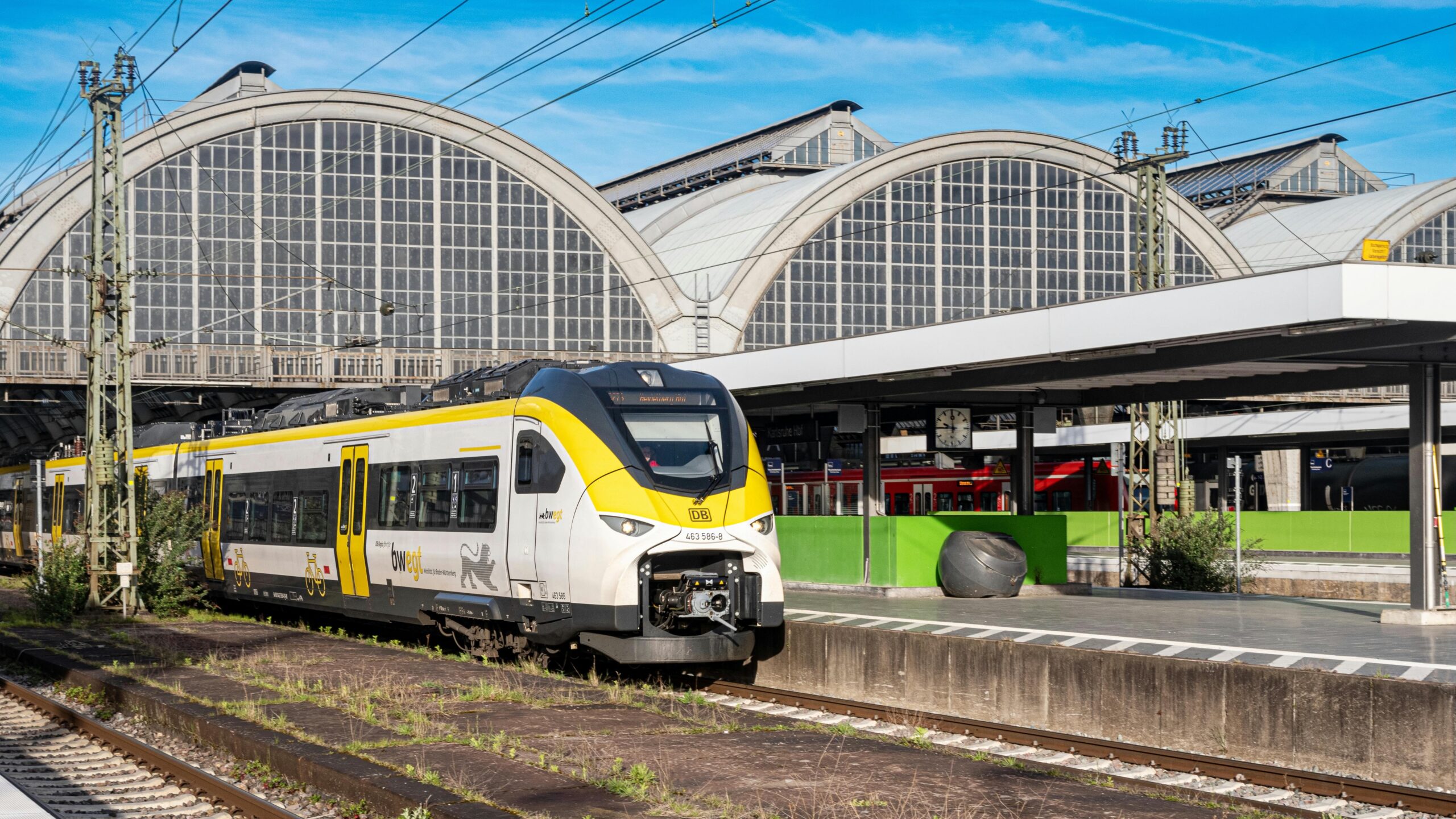
There is a moment that every American traveler knows, somewhere between the third security queue and the gate that has just been changed for the second time, when the romance of European travel briefly leaves the building. The destination is still waiting — Vienna, Barcelona, Amsterdam, Rome — but the airport has done what airports do, which is remind you that getting somewhere is not the same thing as going somewhere.
In 2026, a growing number of American travelers have found a different answer to that moment. They have found it in the train station.
European rail ridership among American visitors has climbed steadily over the past three years, and the shift has accelerated noticeably this year. It is not a single reason driving the change but a convergence of them — economics, convenience, environmental awareness, and something harder to quantify that has to do with how travel actually feels when you are doing it well.
The Airport Math No Longer Works
For years, budget carriers made the case for flying between European cities on price alone. A €29 fare from Paris to Barcelona was a number that ended the conversation before it started. But the full accounting of a budget European flight has never been that number, and travelers in 2026 are doing the math more carefully.
Add the cost of getting to and from a secondary airport — Beauvais is not Paris; Girona is not Barcelona — and you are already adding two hours and thirty euros in each direction. Add the time required at the airport: the recommended arrival window, the security process, the gate wait. Add a checked bag fee if you are carrying more than a carry-on, which most travelers over a week are. Add the taxi or transfer on the arrival end. The €29 flight has become a four-to-five hour door-to-door ordeal that costs, in full, somewhere north of €120.
The Paris to Barcelona high-speed train takes six hours and twenty minutes. It departs from the center of Paris and arrives in the center of Barcelona. No transfer. No secondary airport. No bag fees. A reserved seat with a table, a café car, and the Pyrenees passing outside the window somewhere around hour four. Booked in advance, the fare runs €50 to €90.
For city pairs where high-speed rail exists, the train has become the rational choice. And in 2026, high-speed rail exists across a larger portion of Europe than it ever has before.
The Network Has Grown
The expansion of European high-speed rail has been one of the continent’s sustained infrastructure stories of the past decade, and American travelers are only now catching up with how comprehensive the network has become. The Eurostar now connects London to Amsterdam in under four hours. The French TGV network reaches into Spain, Switzerland, and Belgium with schedules that run like clocks and frequencies that treat the journey as a commute rather than an event. Italy’s Frecciarossa ties together Milan, Florence, Rome, and Naples in times that no flight, door to door, can match.
For a solo traveler building a multi-city itinerary — say, Vienna to Prague to Berlin to Amsterdam — the rail option is not just competitive with flying. It is, in most reasonable comparisons, faster, cheaper, and less exhausting when the full journey is accounted for.
The Eurail Global Pass, which American citizens are eligible to purchase as non-European residents, has also been restructured in recent years to offer more flexibility for the way independent travelers actually move. A pass covering a set number of travel days within a two-month window suits the traveler who wants the freedom to extend a stay in Lisbon or add an unplanned stop in Lyon without rebooking a flight and absorbing a change fee.

What Solo Travelers Have Always Known
There is a particular quality to long-distance train travel that solo travelers have understood for generations and that is difficult to communicate to someone who has not yet experienced it. The train gives you time. Not the anxious, dead time of an airport gate, but actual time — moving time, landscape time, the kind of time that allows for reading and thinking and watching the countryside change from one country’s particular light into another’s.
A solo traveler on the Paris to Madrid overnight train goes to sleep in France and wakes up in Spain. The journey is the transition; the arrival feels earned in a way that stepping off a two-hour flight does not. There is no jet lag, no disorientation, no hour lost in a taxi from an airport on the wrong side of the city. There is a coffee from the café car and the sensation of being, quietly and pleasantly, underway.
For travelers in their fifties and beyond, this matters more than it once did. The physical toll of repeated short-haul flying — the compression, the recycled air, the middle seats, the early morning departures that require a four AM alarm — is a genuine consideration that rail simply removes. Train seats are larger. There is room to walk. The stations are, in most European cities, at the heart of things.
The Sustainability Factor
European rail travel produces a fraction of the carbon emissions of the equivalent flight — estimates vary by route and carrier but the general ratio runs between eight and twenty times lower per passenger. For a growing segment of American travelers, this is a deciding factor rather than a tiebreaker.
The European Union has made rail sustainability a policy priority, investing heavily in cross-border connections and pushing to make the overnight train network — which nearly collapsed in the nineties — viable again. New overnight routes have launched between Vienna and Paris, between Brussels and Berlin, between Zurich and Barcelona. The night train is not a nostalgia project. It is a genuine alternative to flying, and it is being treated as one.
What to Know Before You Go
Booking European rail as an American requires a small amount of advance planning but is straightforward once you understand the system. The main booking platforms — Rail Europe, Trainline, and the individual national operators such as SNCF, DB, and Renfe — all sell to international customers and accept American cards.
Book high-speed routes at least three to four weeks ahead for the best fares. Flexibility costs more; fixed reservations on specific trains offer the largest savings. The Eurail pass makes sense for itineraries covering four or more countries; for a focused two or three city trip, point-to-point tickets are usually better value.
Carry your passport. Cross-border trains in the Schengen zone do not require it for EU citizens but will need it for Americans. Keep it accessible. Check out your travel insurance options BEFORE you leave.
And allow yourself to arrive at the station without the airport mindset. You do not need to be there ninety minutes early. You do not need to remove your shoes. You need to find your platform, which the departures board will tell you ten minutes before the train leaves, and you need to find your seat, which your ticket will tell you, and then you need to sit down.
The train will do the rest.
Planning a solo rail trip through Europe? Browse our 48-hour city guides — built specifically for independent travelers who want to make the most of every stop.
48-Hour City Guides
Ready to Go? Grab Your Guide.
Hour-by-hour itineraries built for independent travelers.
London, Paris, Vienna, Prague, Amsterdam and more — $7.99 each.
