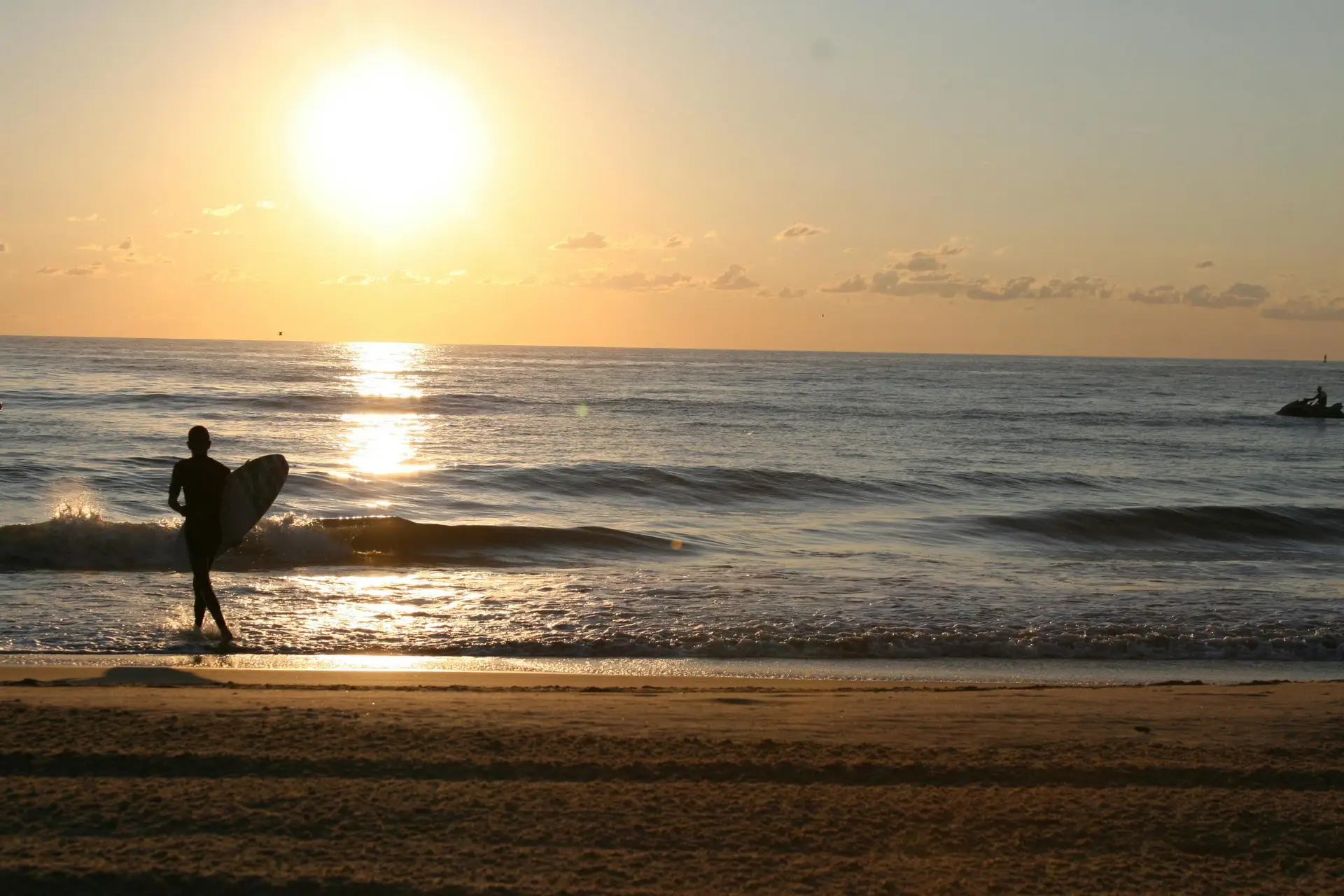
Virginia Beach does not reveal its entire self at the shoreline. It stretches, transitions, and unfolds across distinct landscapes. You can explore the classic, salt-sprayed Boardwalk or the ancient maritime forests of First Landing. Further south, you will find the quiet, agricultural expanses of Pungo. For a solo traveler, this variance is an open invitation. The destination offers the comfort of a classic coastal retreat alongside the space to discover something entirely personal.
Long before it became a modern resort city, this corner of southeastern Virginia was a unique landscape. It was defined by shifting sands, dense pine forests, and vast waterways. Its position at the mouth of the Chesapeake Bay made it a crucial threshold in American history. Ultimately, the area served as both a literal point of first arrival and a strategic maritime gateway.
The Point of First Landing
The city’s historical anchor drops in 1607 at Cape Henry. It was here that English colonists first set foot on North American soil, exploring the dunes and maritime forests before moving inland to establish Jamestown. For the solo traveler wandering through First Landing State Park today, that history feels remarkably tangible. Walking the quiet, cypress-fringed trails, it is easy to see the landscape much as it looked over four centuries ago—a preserved pocket of wilderness where the natural world still dominates.
From Lifesaving Stations to the Resort Era
In the late 19th and early 20th centuries, Virginia Beach evolved from a rugged, isolated coast into a celebrated destination. The sea forged its early modern identity. This era was initially marked by the heroic surfmen of the United States Lifesaving Service. As the precursor to the Coast Guard, they patrolled the treacherous shores.
The arrival of the railroad transformed the area. It brought visitors seeking the therapeutic benefits of ocean air. Later, the construction of the grand Cavalier Hotel in 1927 cemented the city’s reputation. It quickly became a playground for artists, presidents, and musicians of the Jazz Age. This duality still defines the oceanfront’s character today, balancing the wild ocean with elegant coastal hospitality.
What Makes Virginia Beach Distinct: Character, Culture & the Solo Experience
Virginia Beach thrives on its transitions. Here, military precision, agricultural heritage, and coastal counter-culture exist side by side. Because the city is so vast, it naturally rewards a solo traveler’s independence. You can spend a morning in deep, quiet solitude among the marshes. By afternoon, you can easily immerse yourself in a bustling, creative neighborhood.
The local social culture is relaxed and unpretentious. It is deeply tied to the rhythm of the tides and the changing seasons. This makes the city an exceptionally comfortable place to travel alone. Coastal life naturally encourages outdoor, individual pursuits like cycling along the boardwalk, kayaking through the back bays, or reading on the sand. In this environment, solitude feels entirely deliberate and at home.
The military presence adds a distinct layer to the city’s atmosphere, particularly the naval aviation community at NAS Oceana. The rumble of jets overhead is a constant reminder of the city’s disciplined, global connections. This unique element contrasts beautifully with the laid-back, creative energy bubbling up from the local arts districts.
Places That Tell Virginia Beach’s Story
The sites that define Virginia Beach are scattered across its unique ecosystems and neighborhoods, each representing a different facet of the city’s identity.
-
The Virginia Beach Boardwalk: Stretching three miles along the oceanfront, this iconic walkway tells the story of the city’s transformation into a premier resort destination. It is a vibrant, shared space where public art, ocean views, and coastal energy meet.
-
First Landing State Park: With its lagoons, Spanish moss, and ancient dunes, this park protects the site of the 1607 arrival. It tells the story of the raw, untouched coastal wilderness that greeted America’s early explorers.
-
The ViBe Creative District: Located just blocks from the oceanfront, this enclave of murals, local artisan shops, and independent coffee roasters tells the city’s modern cultural story. It represents Virginia Beach’s shift toward hyper-local creativity, community, and entrepreneurship.
-
Cape Henry Lighthouse: Standing at the entrance to the Chesapeake Bay, the original 1792 lighthouse was the first federal public works project under the U.S. Constitution. It tells a story of maritime safety, young nationhood, and strategic coastal defense.
-
The Atlantic Wildfowl Heritage Museum (de Witt Cottage): Housed in the oldest remaining structure on the oceanfront (built in 1895), this museum explores the history of wildfowl hunting and carving. It captures the spirit of early coastal life before the high-rises took over.
-
Pungo Agriculture District: Just a short drive south of the tourist hubs lies thousands of acres of farmland. Pungo tells the often-overlooked story of the city’s deep agrarian roots, famous for its berries, farm stands, and slow-paced country roads.
Why Virginia Beach Rewards the Solo Traveler
Virginia Beach rewards the solo traveler because it refuses to be just one thing. For example, the Boardwalk provides the energy of a bustling beach town. Meanwhile, the ViBe District offers artistic inspiration through a community of creators. Finally, the wilderness of False Cape or First Landing provides a perfect escape that feels entirely detached from the modern world.
Traveling alone here sharpens your eye for these contrasts. You notice the way the morning light catches the Atlantic surf, the sudden shift from maritime forest to open beach, and the quiet pride of a community built at the intersection of land and sea. This destination does not demand a crowd to be enjoyed; it simply requires a willingness to explore its varied horizons at your own pace.
48 HOURS IN VIRGINIA BEACH — THE GUIDE
This article gives you the context. The guide turns that context into a real trip, with an hour-by-hour sequence, neighborhood flow, exact dining picks (from fresh seafood to Pungo farm-to-table), transport tips, sunrise strategy, and insider moves designed specifically for solo travelers.
Get the 48 Hours in Virginia Beach guide → $7.99
Browse all 48-Hour Guides now
48-Hour City Guides
Ready to Go? Grab Your Guide.
Hour-by-hour itineraries built for independent travelers.
London, Paris, Vienna, Prague, Amsterdam and more — $7.99 each.
