Berlin only starts revealing itself once you stop expecting coherence from it. The city was divided for nearly thirty years, rebuilt multiple times across the twentieth century, and shaped by political systems that often erased what came before them. A solo traveler notices this differently. Alone, you begin catching the seams between eras: Soviet apartment blocks beside Prussian facades, techno clubs inside former power stations, fragments of the Wall appearing unexpectedly between cafés and bike lanes.
The History of Berlin: How It Became What It Is
Berlin feels modern partly because so much of it had to be rebuilt. Unlike Rome or Paris, where continuity defines the experience, Berlin’s identity comes from rupture. War, division, reunification, and reinvention shaped the city physically and psychologically. What surprises many first-time visitors is how openly Berlin leaves those scars visible rather than trying to smooth them over.
The Prussian Capital
Berlin’s rise accelerated in the eighteenth century when it became the capital of the Kingdom of Prussia under Frederick the Great. Wide ceremonial boulevards, neoclassical architecture, and monumental institutions began reshaping what had previously been a relatively modest trading city on the Spree River. Unter den Linden, originally laid out as a riding avenue connecting the royal palace to hunting grounds west of the city, still functions as Berlin’s grand historical axis today. Prussian discipline and state-building left a permanent imprint on the city’s structure. Even now, Berlin’s museums, formal squares, and government buildings reflect a city that once saw itself as the administrative center of a rising European power rather than merely Germany’s cultural capital.
War, Destruction & Division
The Second World War transformed Berlin more dramatically than perhaps any major European capital. By 1945, large sections of the city lay in ruins after Allied bombing campaigns and the Battle of Berlin itself. But destruction alone does not explain modern Berlin; division does. In 1961, East Germany constructed the Berlin Wall, physically splitting the city for twenty-eight years. Entire neighborhoods developed under completely different political systems. West Berlin became isolated, experimental, and culturally rebellious, while East Berlin evolved into the symbolic capital of the socialist German Democratic Republic. The guide captures this tension well through places like the Reichstag, the East Side Gallery, and Topography of Terror — sites that only fully make sense once you understand how recent division still is here.
The Reunified City
When the Wall fell in 1989, Berlin entered another transformation almost overnight. Empty factories, abandoned buildings, and former border zones became galleries, clubs, cafés, and creative spaces during the 1990s. Many of the city’s defining cultural institutions emerged from that unusual period of openness and improvisation. Potsdamer Platz, once a barren Cold War no-man’s land, became one of Europe’s largest reconstruction projects. Meanwhile, neighborhoods like Kreuzberg, Friedrichshain, and Prenzlauer Berg evolved into centers of contemporary art, nightlife, independent publishing, and international migration. Modern Berlin still carries this atmosphere of experimentation. The city often feels unfinished in the best possible sense — less polished than London or Paris, but more willing to reinvent itself constantly.
What Makes Berlin Distinct: Character, Culture & the Solo Experience
Berlin’s defining quality is freedom from performance. Many major European capitals feel aware of their own beauty and importance. Berlin often feels indifferent to whether you approve of it or not. That changes the experience of moving through the city alone. There is far less pressure here to consume the “correct” version of Berlin because the city itself resists becoming only one thing.
Public space matters deeply in Berlin. Parks, canal paths, beer gardens, flea markets, bookstores, late-night cafés, and open-air cultural events shape everyday life more than monuments alone. The Tiergarten operates less like a formal city park and more like a shared breathing space inside an otherwise sprawling capital. In neighborhoods such as Kreuzberg or Prenzlauer Berg, social life spills naturally into sidewalks and courtyards, especially during warmer months.
Berlin also rewards curiosity unusually well because the city is built around layers of history rather than singular landmarks. A traveler moving alone can follow themes instead of itineraries: Cold War history one afternoon, Turkish-German culture the next, contemporary art after that. Even the rhythm of the city supports independence. Nobody notices if you spend three hours inside a museum, sit alone beside the Spree River, or disappear into a café with a book for an entire afternoon. Berlin’s culture leaves room for solitude without making solitude feel isolating.
That openness extends socially too. Berliners have a reputation for bluntness, but beneath that directness is often a genuine lack of judgment about how people choose to move through the city. Solo dining feels normal. Sitting alone in a beer garden feels normal. Wandering for hours without a plan feels completely aligned with the city itself.
Places That Tell Berlin’s Story
Together, these places explain why Berlin feels less preserved than continuously renegotiated. The city’s identity comes not from one historical era but from the tension between several.
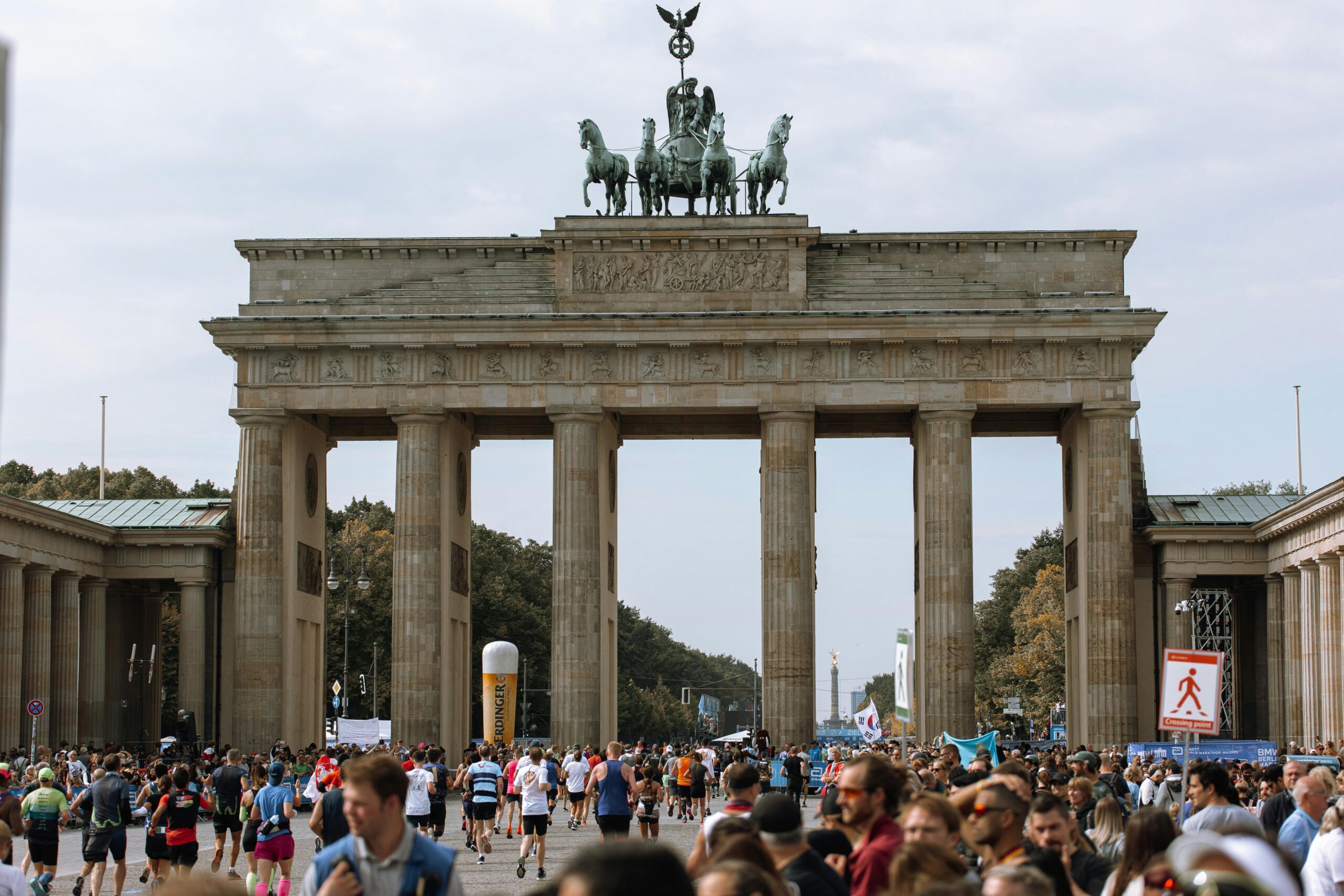
Brandenburg Gate once symbolized Prussian grandeur before becoming a physical frontier during the Cold War, trapped between East and West Berlin for nearly three decades. Standing beneath it today reveals how dramatically the meaning of a monument can change depending on the political system surrounding it.
The Reichstag embodies modern Germany’s attempt to rebuild democratic identity after dictatorship and division. Norman Foster’s glass dome, added during the building’s late-1990s reconstruction, intentionally places visitors above parliament itself as a symbol of political transparency.
Museum Island reflects Berlin’s nineteenth-century ambition to position itself among Europe’s great intellectual capitals. The UNESCO-listed museum complex still demonstrates how seriously Prussia approached archaeology, scholarship, and cultural prestige.
The East Side Gallery preserves the longest surviving section of the Berlin Wall, transformed into public art immediately after reunification in 1990. Walking beside it makes the division of the city feel startlingly recent rather than distant history.
Topography of Terror occupies the former headquarters of the Gestapo and SS, directly confronting the bureaucratic machinery behind Nazi rule. Berlin’s willingness to place this history openly within the modern city explains much about Germany’s broader relationship with historical accountability.
Kreuzberg tells the story of modern Berlin better than almost any monument. Shaped by immigration, counterculture, political activism, and creative reinvention, the district reveals how the city became one of Europe’s most culturally layered capitals after reunification.
Why Berlin Rewards the Solo Traveler
Berlin rewards solo travelers because the city allows people to disappear into it comfortably. Many destinations constantly demand decisions: where to go next, what to photograph, what not to miss. Berlin often works better when approached with less structure.
The city is large enough that nobody expects you to “complete” it, which removes a surprising amount of pressure. A solo traveler can spend an afternoon moving slowly between neighborhoods without feeling inefficient. The guide itself reflects this well by emphasizing flow, pacing, and transitions between districts rather than trying to maximize monument count.
Berlin is also one of Europe’s least socially restrictive cities. Beer gardens operate around communal tables. Public transport runs late and reliably. Museums, parks, bookstores, galleries, and cafés all support solitary experiences naturally. Even the nightlife culture — famous though it is — tends to prioritize personal freedom over spectacle.
Most importantly, Berlin rewards people willing to engage with complexity. The city refuses simplification. It asks visitors to hold contradictory histories together at once: imperial ambition, fascism, division, migration, reinvention, artistic experimentation, and contemporary European life all layered into the same streets. Solo travelers often experience that more deeply because they can move through the city reflectively rather than performatively.
48 HOURS IN BERLIN — THE GUIDE
This article explains Berlin. The guide shows you how to move through it properly, with an hour-by-hour structure built around museum timing, neighborhood flow, realistic transit connections, Reichstag booking strategy, East Side Gallery pacing, food recommendations that avoid tourist traps, and an interactive map designed specifically for independent travelers.
Ready to Go?
Berlin becomes far more rewarding once you stop expecting it to behave like a traditional European capital. Move slowly between neighborhoods, allow time for the city’s history to settle properly, and leave space for the unexpected conversations, exhibitions, cafés, and streets that rarely appear in the guidebooks anyway.
48-Hour City Guides
Ready to Go? Grab Your Guide.
Hour-by-hour itineraries built for independent travelers.
London, Paris, Vienna, Prague, Amsterdam and more — $7.99 each.
