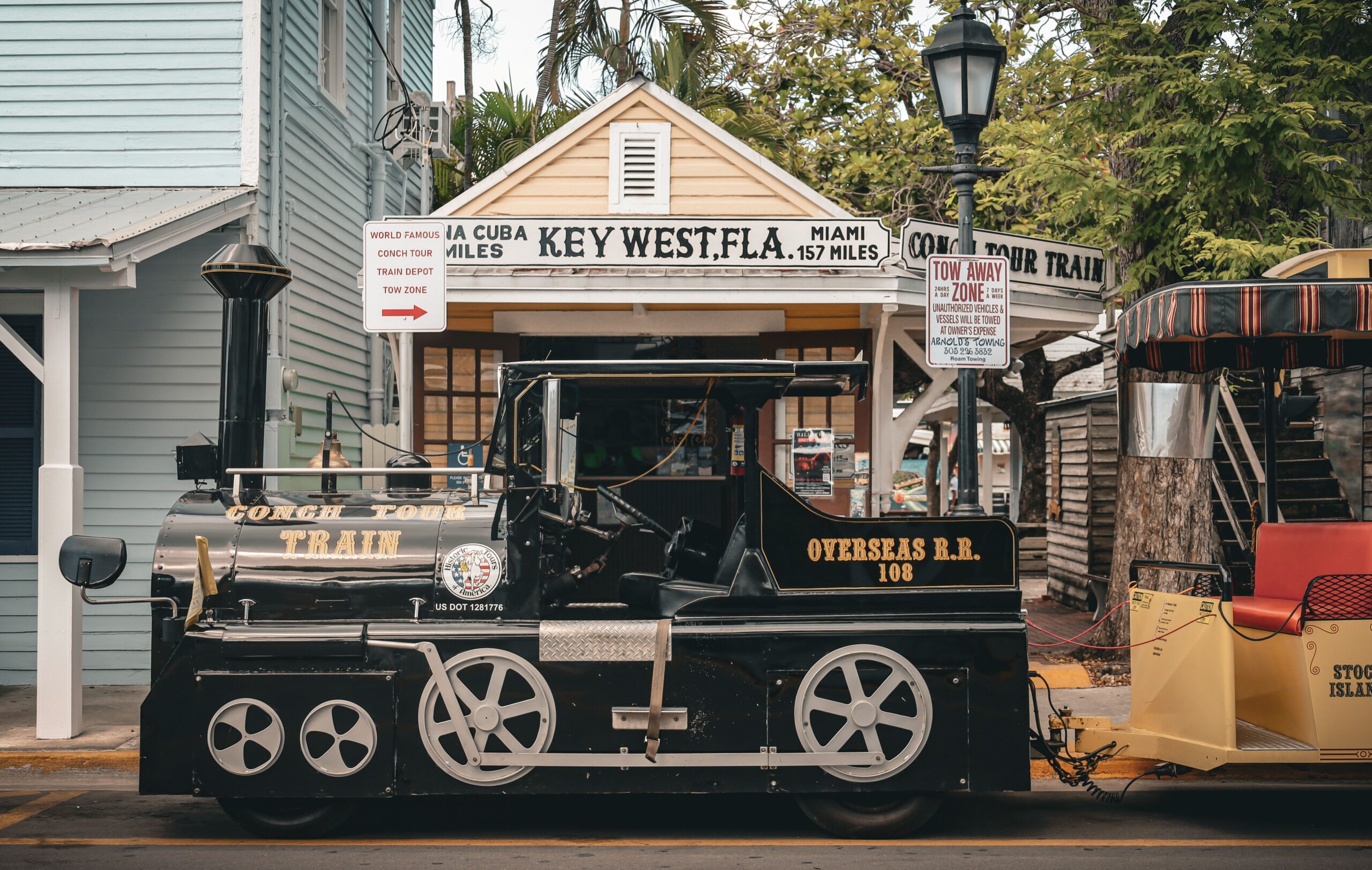
Key West sits 90 miles from Cuba and 150 miles from Miami. It is the last stop on a 113-mile chain of islands connected by bridges over open water. Throughout its history, it has done things the mainland disapproved of: wrecking ships for profit, manufacturing cigars with Cuban labor, running rum during Prohibition, sheltering writers and artists and misfits who needed distance from American convention. The result is a small island city — two miles by four miles, population 25,000 — with a cultural density that has no business existing this far from anywhere. A solo traveler who arrives knowing even part of this history will find an island that is genuinely strange and genuinely itself, underneath the bar crawl that gets most of the attention.
The History of Key West: How It Became What It Is
The Wrecking Capital of America
For most of the 19th century, Key West was the wealthiest city per capita in the United States. The source of that wealth was, legally speaking, maritime salvage. Legally, it was the deliberate luring of ships onto the reefs that fringe the Florida Keys. Wrecking was a licensed trade. When a ship ran aground, licensed wreckers raced to reach it first, claim the salvage rights, and bring the cargo to Key West for auction. The industry was regulated, profitable, and entirely dependent on the continued inadequacy of navigational charts. When the US government improved lighthouse coverage in the 1850s, the wrecking industry collapsed. Key West was forced to find another economy. It found two: sponging and cigar manufacturing. It pursued both with the same opportunistic energy it had applied to wrecking.
The Cuban Cigar City
By 1890, Key West was the cigar manufacturing capital of the United States. The city had 18,000 people. The majority of the workforce sat in long factory halls rolling Cuban tobacco into cigars. While they worked, a reader — called a lector — read to them from newspapers and novels. The lector tradition came from Cuba with the workers. It had been established in Havana in the 1860s. It made the cigar factories of Key West among the most politically literate workplaces in 19th-century America. The workers who rolled cigars in Key West funded Jose Marti’s Cuban independence movement from the proceeds. The connection between this small American island and Cuban independence is not incidental — it is structural. It explains the cultural affinity between Key West and Havana that persists in the architecture, the food, and the rhythm of daily life.
The Writers Who Made It Famous
Key West’s distance from convention attracted a specific type of creative person in the 20th century: Ernest Hemingway arrived in 1928 and stayed for twelve years, writing A Farewell to Arms and For Whom the Bell Tolls in a studio above the pool house of a Spanish Colonial house on Whitehead Street. Tennessee Williams came in the 1940s. Robert Frost spent winters here. The artists and writers who followed — and the gay community that established itself here from the 1970s onward, when Key West’s distance and tolerance made it a refuge — created the counterculture identity that still defines the island’s self-image: a place that has always made room for people who did not fit elsewhere.
What Makes Key West Distinct: Character, Culture & the Solo Experience
Key West is small enough to walk end to end in an hour and dense enough to fill days. The historic district — roughly everything south of the highway, in the Old Town — is a grid of Victorian wooden houses with deep porches, Bahamian-influenced architecture, and tropical gardens that have been improbably maintained through 150 years of hurricanes. The density of the architectural stock is extraordinary: Key West has the largest collection of 19th-century wooden structures in the United States, because the island had no firebreak — burning the old houses down meant burning everything — and because wood, imported from the mainland, was too valuable to demolish.
The social culture is governed by the proximity of the water and the irrelevance of time. Sunset at Mallory Square — the nightly outdoor performance that draws the entire island to the waterfront to watch the sun go down — is one of the most genuinely communal public events in Florida: everyone arrives, everyone stays, everyone leaves together. For a solo traveler, this is an effortlessly social experience. The bar scene on Duval Street is the obvious draw but not the only one: the local bars — Schooner Wharf, The Porch — have a regulars culture that absorbs visitors naturally.
Places That Tell Key West’s Story
The Ernest Hemingway Home and Museum. The 1851 Spanish Colonial house at 907 Whitehead Street is as honest a literary house museum as exists in America. Hemingway wrote here through the 1930s. The studio is intact. The pool — the first in Key West, installed at considerable expense while Hemingway was on a fishing trip — is operational. The 60-odd polydactyl cats that descend from his original six-toed cat still roam the grounds.
The Custom House Museum. The 1891 Richardsonian Romanesque building on Front Street was once the federal courthouse and post office. Now it is a museum. It houses the best historical collection on Key West’s wrecking, sponging, and cigar industries. The context it provides makes the rest of the island legible.
Mallory Square at Sunset. The nightly ritual deserves its reputation. Performing artists work the crowd. The entire island directs its attention toward the same horizon. The sun touches the water and everyone applauds. It is deeply touristy and completely genuine simultaneously.
Fort Zachary Taylor. The 1845 Civil War fort sits at the island’s southwest tip. Union troops seized it at the start of the war and used it as a prison and supply depot. It is now a state park with the best beach on the island. The fort contains the largest collection of Civil War-era cannons in the United States, most of them excavated from fill where they had been buried at the end of the war.
The Key West Cemetery. Nineteen acres in the center of the island. The water table makes below-ground burial impractical, so the tombs rise above ground. The epitaphs are of legendary frankness — “I told you I was sick” is real. A memorial marks the 260 sailors who died when the USS Maine exploded in Havana Harbor in 1898, the event that started the Spanish-American War, 90 miles from here.
Why Key West Rewards the Solo Traveler
Key West is, structurally, a walking city for one. The streets are narrow, the distances are short, and the experience of wandering through the historic district without a plan — down a lane of Victorian cottages, into a garden bar, back out to the waterfront — is one of those travel experiences that rewards the person who has no one to consult. The solo traveler also has easy access to the island’s most social institutions: the sunset at Mallory Square, the bar stool at Schooner Wharf, the Hemingway Home tour where the guide will talk to you at length about the cats. Key West is tolerant in the original sense of the word — a place where being alone is not a condition that requires explanation.
48 HOURS IN KEY WEST — THE GUIDE
The guide gives you the hour-by-hour sequence through Old Town, the waterfront, the historic district, and the beaches — with specific bar, restaurant, and activity recommendations calibrated for the solo traveler who wants more than Duval Street. The logistics for getting there from Miami and the best neighborhoods to stay in are all there.
Get the 48 Hours in Key West guide → $7.99
Browse all 48-Hour Guides at GoingSolo.Life/guides/
Ready to Go?
Key West is one of those American places that exceeds its reputation in both directions — the bar scene is as present as advertised, and the history is considerably deeper than most visitors discover. The solo traveler who arrives knowing the wreckers and the cigar readers and the cats will find an island that gives back. Browse all the 48-Hour Guides at GoingSolo.Life/guides/ — each one built for travelers who want the full story.
48-Hour City Guides
Ready to Go? Grab Your Guide.
Hour-by-hour itineraries built for independent travelers.
London, Paris, Vienna, Prague, Amsterdam and more — $7.99 each.
