Belgium attracts millions of visitors every year, but for many travelers, the country’s image still revolves around two places: the political energy of Brussels and the fairytale canals of Bruges.
Brussels alone welcomes well over 4 million annual visitor arrivals and remains one of Europe’s most internationally connected capitals. It is well-known for serving as the headquarters of the European Union and NATO, alongside its grand architecture, comic-book culture, beer scene, and iconic Grand Place.
Then there is Bruges, Belgium’s endlessly photographed medieval jewel. The city welcomed around eight million visitors in 2024 alone, drawing travelers from across the world to its cobbled lanes, canals, gothic buildings, and postcard-perfect atmosphere.
But Belgium is far more layered than many visitors expect. Beyond the crowds gathering beneath Bruges’ Belfry and the institutions surrounding Brussels’ European Quarter lies another side of the country.
Here, you will find smaller historic towns, creative Flemish cities, overlooked cultural hubs, and scenic countryside landscapes. It is a place of deeply regional food traditions, where Belgium begins to feel quieter, more local, and far less performative. Some destinations, like Mechelen, are now even being described as excellent alternatives to the overtourism affecting Bruges and parts of Brussels.
That is exactly why we decided to create this itinerary. This is not a guide to ticking off Belgium’s most famous landmarks. Instead, this 48-hour journey is designed for travelers who want to experience another version of the country—one that stretches far beyond the usual Brussels-and-Bruges formula.
Day One: Exploring Ghent and Mechelen — Belgium’s Most Underrated Cities
Morning in Ghent: Why This Historic Belgian City Is Winning Over Travelers
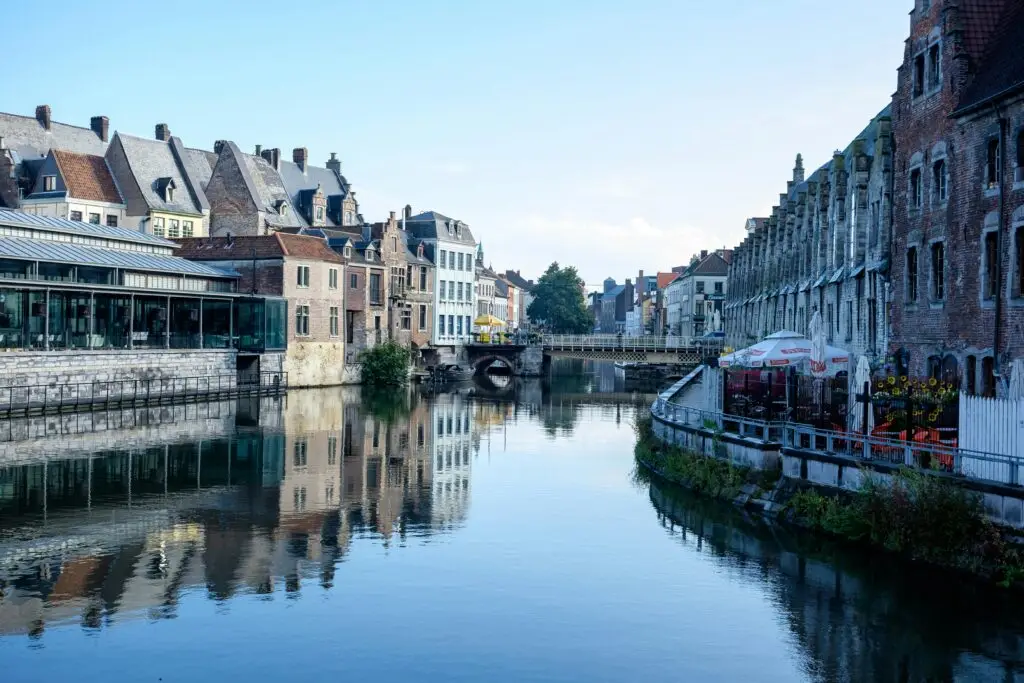
Begin your journey in Ghent, a city many travelers quietly end up preferring over Bruges. While Bruges often feels preserved behind glass, Ghent still feels alive. Medieval towers rise above tram lines, students cycle through centuries-old streets, and locals spill onto café terraces beside canals that once powered one of Europe’s richest trading cities.
Start around Graslei and Korenlei, the city’s historic waterfronts along the River Lys. Guild houses line the water, church spires dominate the skyline, and the atmosphere feels noticeably more local than Belgium’s more touristic hotspots.
From there, walk toward Gravensteen, the imposing 12th-century castle built by the Counts of Flanders. Few European cities place a fortress so dramatically in the middle of everyday urban life.
Continue toward Saint Bavo’s Cathedral, home to The Adoration of the Mystic Lamb, one of the most important surviving works of Northern Renaissance art.
What makes Ghent increasingly attractive to travelers is the balance it maintains between history and modern identity. The city has developed a reputation for independent culture, vegetarian dining, nightlife, and creative energy while avoiding some of the overtourism pressures facing Bruges.
Afternoon in Ghent: Best Places for Local Food, Beer, and Hidden Streets
Belgium’s culinary identity goes far beyond waffles and chocolate, and Ghent is one of the country’s best cities to experience that firsthand.
Head into Patershol, the city’s former working-class quarter now filled with intimate restaurants, wine bars, hidden courtyards, and independent kitchens tucked between narrow medieval lanes. The atmosphere here feels quieter and more atmospheric than the heavily touristed restaurant zones found elsewhere in Belgium.
This is an ideal place to try regional dishes such as:
- Flemish beef stew cooked in dark Belgian beer
- Waterzooi, Ghent’s traditional creamy stew
- North Sea mussels with fries
- Belgian Trappist beers brewed in monastic abbeys
After lunch, leave room for wandering. Ghent rewards slow exploration more than structured sightseeing. Some of the city’s best moments happen unexpectedly: a hidden canal, a jazz bar opening early, students gathered beside the riverbanks, or sunlight catching gothic facades late in the afternoon.
Evening in Mechelen: Belgium’s Overlooked Medieval City Between Brussels and Antwerp
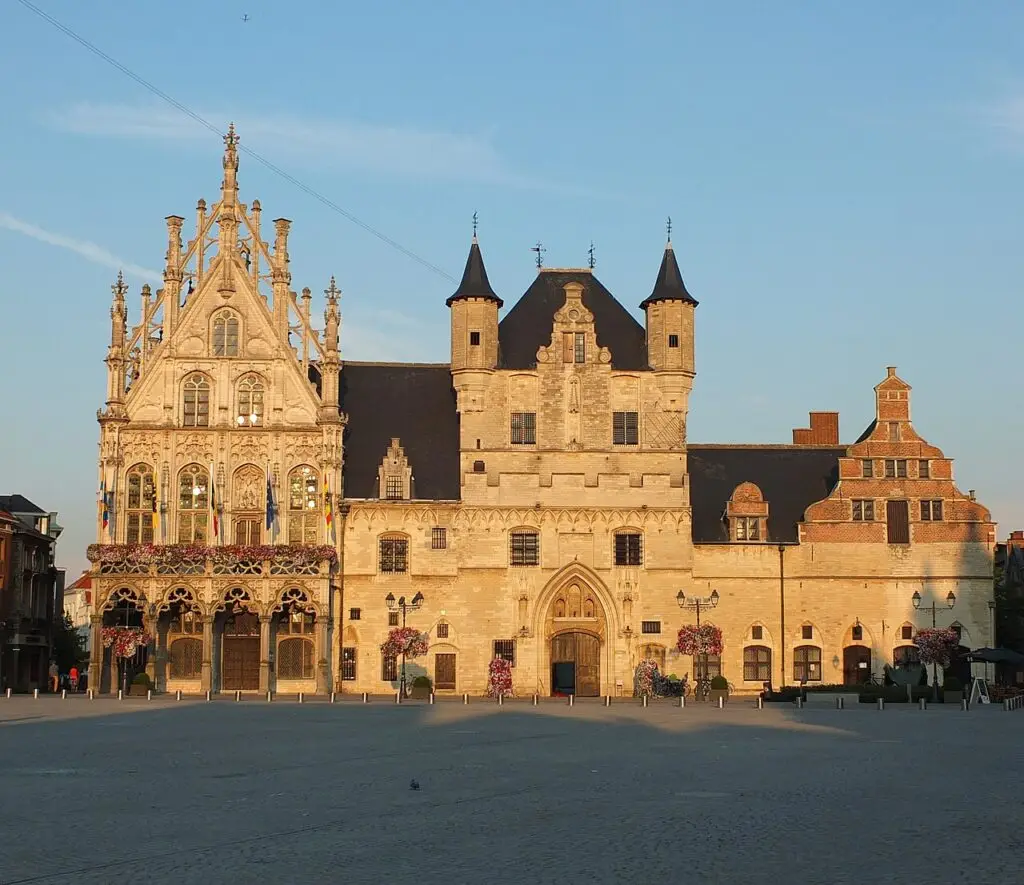
By early evening, take the short train ride to Mechelen, one of Belgium’s most underrated destinations.
Positioned between Brussels and Antwerp, Mechelen is often passed through rather than explored, which is part of its appeal. The city combines Flemish architecture, canals, cathedral towers, and relaxed local life without the heavy tourism crowds found elsewhere.
Spend the evening around the Grote Markt before visiting St. Rumbold’s Cathedral, whose tower dominates the skyline. From the top, views stretch across rooftops, church spires, and the flat Flemish landscape beyond.
As night settles in, Belgium’s café culture becomes part of the experience. Belgian beer culture is deeply regional and surprisingly nuanced, with many bars serving hundreds of varieties ranging from Trappist ales to strong abbey beers and sour lambics.
Stay longer than planned. Belgium tends to reveal itself gradually.
Day Two: Discovering Antwerp and Dinant Beyond Belgium’s Tourist Trail
Morning in Antwerp: Art, Fashion, History, and Belgium’s Creative Capital
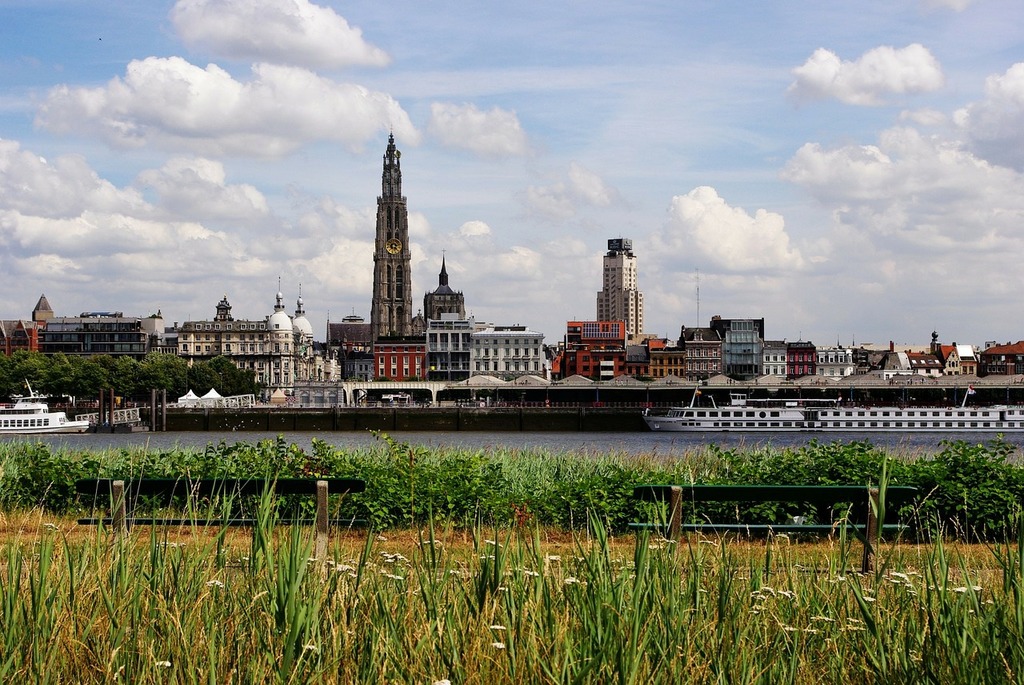
Wake up in Antwerp, Belgium’s largest city by population and one of Europe’s most historically important trading ports.
Many visitors associate Antwerp primarily with diamonds and fashion, but the city’s identity runs deeper than that. Centuries of maritime trade, migration, art, and commerce shaped Antwerp into one of Belgium’s most internationally connected cities long before Brussels became Europe’s political capital.
Start at Antwerp Central Station, frequently ranked among the world’s most beautiful train stations thanks to its monumental architecture and vast domed hall.
From there, walk into the historic center toward Cathedral of Our Lady, home to major works by Flemish master Peter Paul Rubens.
Unlike Bruges’ preserved medieval atmosphere, Antwerp feels more cosmopolitan and contemporary. Old taverns stand beside concept stores, industrial docklands have transformed into creative districts, and the city’s energy feels distinctly modern.
Explore neighborhoods like Het Zuid or Eilandje, where converted warehouses, galleries, waterfront cafés, and museums reveal Antwerp’s evolving cultural identity.
Afternoon in Dinant: One of Belgium’s Most Scenic Towns Along the Meuse River
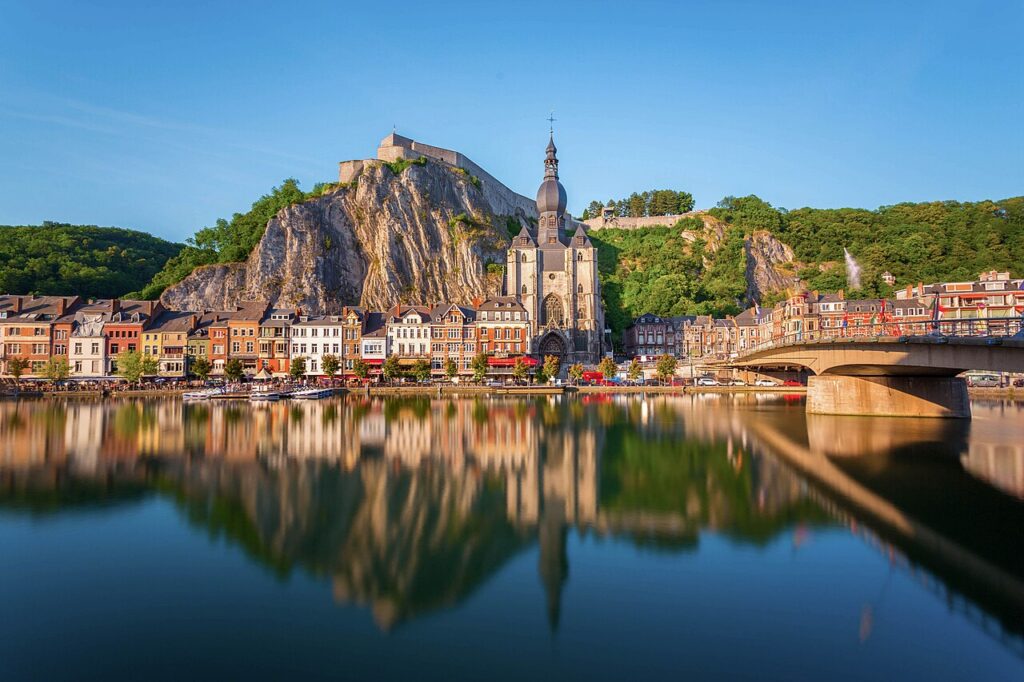
Most travelers never make it into Wallonia, Belgium’s French-speaking southern region. That is a mistake.
Travel south toward Dinant, one of Belgium’s most visually dramatic towns. Positioned tightly between steep cliffs and the River Meuse, Dinant feels completely different from the Flemish cities further north.
The landscape changes immediately. Flat urban skylines give way to forests, river valleys, limestone cliffs, and winding roads cutting through the Ardennes region.
Dinant’s setting feels almost cinematic:
- Colorful riverside buildings
- A cliffside citadel overlooking the valley
- Gothic church towers beside the river
- Boats drifting slowly across the Meuse
Take the cable car or climb toward Citadel of Dinant for panoramic views across the valley.
The town is also famous as the birthplace of Adolphe Sax, inventor of the saxophone, giving Dinant an unexpected musical legacy woven into its streets and public art.
Evening in Dinant: River Views, Belgian Beer, and a Slower Side of Belgium
As evening settles over Dinant, the town takes on an entirely different atmosphere. Day-trippers begin leaving, the cliffs surrounding the Meuse River darken into shadow, and lights from cafés and riverside terraces begin reflecting across the water. Compared to Belgium’s larger cities, Dinant feels remarkably calm at night.
Start the evening with a slow walk along the Meuse promenade, where some of the town’s best views appear after sunset. The illuminated façade of the Collegiate Church of Notre Dame stands dramatically beneath the cliffs, while the Citadel of Dinant towers above the river, glowing over the valley after dark.
This is one of the best places in Belgium to slow the pace down completely. Rather than rushing between landmarks, Dinant works best when experienced gradually: sitting beside the river with a Belgian beer, watching boats move quietly through the valley, and taking in how different Wallonia feels compared to Flanders.
Several riverside cafés and brasseries remain open into the evening, many specializing in regional Belgian beers and Ardennes-inspired dishes. Try local Trappist ales, Belgian blond beers, or darker abbey beers alongside regional specialties like cured Ardennes ham, croquettes, or rich Belgian stews.
If time allows, stay long enough to see the reflections from the bridge lights spread across the river. Dinant may not receive the same global attention as Bruges or Brussels, but at night, it quietly becomes one of Belgium’s most memorable places.
read alone, travel alone —
Ready to Go? Grab Your Guide.
Hour-by-hour itineraries built for independent travelers.
Free 48-hour guides, safety guides, and interactive maps — every city.