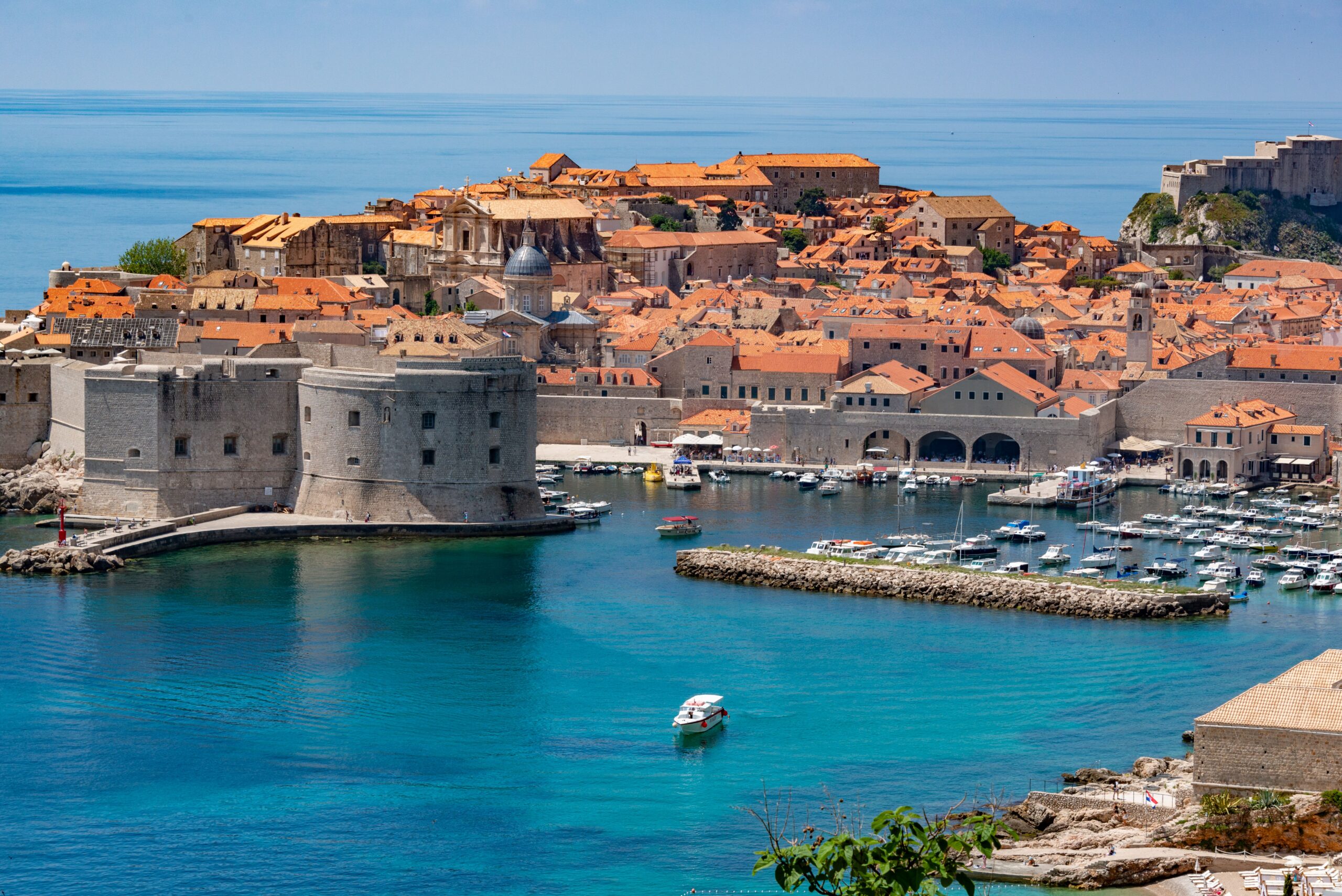
Salty Adriatic breezes brush against massive, pale limestone walls that have stood firm for centuries. Meanwhile, a sea of vibrant, crimson-tiled roofs glows brilliantly under the Mediterranean sun. This contrast defines the city. It constantly balances its ancient history as an impregnable fortress with a welcoming, sun-drenched coastal charm. For a solo traveler, this unique friction offers an incredible landscape to explore alone. A group is entirely unnecessary when walking down polished stone avenues. Independent travelers can absorb a community built on diplomatic genius and maritime resilience completely at a personal pace.
The History of Dubrovnik: How It Became What It Is
A Refuge on the Rocks
Dubrovnik began as a desperate island sanctuary known as Ragusa. In the 7th century, refugees fled devastating Slavic invasions on the mainland. They established a fortified settlement on a steep, rocky island separated from the coast by a narrow channel. These early citizens quickly realized that survival required absolute mastery of defense and engineering. They systematically filled the marshy channel to merge with mainland settlements, creating the limestone spine of the city. By choosing an isolated, vertical landscape, they built a natural fortress. This initial struggle laid the literal groundwork for a city that valued liberty above all else.
The Diplomatic Maritime Republic
By the 14th century, this rocky sanctuary transformed into the Republic of Ragusa, a commercial naval power. The city-state operated as the ultimate merchant bridge between the Ottoman Empire and Christian Europe. Dubrovnik’s shipyards churned out massive, ocean-going galleons that sailed global trade routes with pride. However, the republic’s greatest weapon was not its navy, but its masterful diplomacy. Ragusan statesmen paid clever tributes and negotiated sophisticated neutrality treaties to maintain complete independence. They successfully outmaneuvered massive empires for centuries. The city’s motto, “Liberty is not sold for all the gold in the world,” became a living reality.
The Shell of Stone and Renewal
A catastrophic earthquake in 1667 leveled the city, ending its golden economic age. Yet, the citizens rebuilt the entire old town in a uniform, elegant Baroque style. Centuries later, the Balkan conflicts of the 1990s brought devastating artillery bombardment right over the historic walls. The world watched in horror as historic monuments burned. However, a meticulous restoration era quickly followed the conflict. Today, Dubrovnik continuously navigates the tension between its massive global popularity and its authentic local identity. This modern resilience gives the ancient stone citadel its defiant, timeless energy.
What Makes Dubrovnik Distinct: Character, Culture & the Solo Experience
Dubrovnik operates with a remarkably dramatic, self-contained coastal energy. Locals interact with a dignified, quiet pride in cafes, squares, and along the old harbor. The local culture heavily prioritizes the fjaka—a sublime, relaxed state of mind where time slows down completely. Nobody rushes through a conversation or a morning espresso here. This distinct lack of urgency creates an exceptionally comforting environment for a solo traveler. Navigating the traffic-free stone lanes happens with absolute ease, allowing an independent traveler to move without distraction.
The social fabric centers deeply around the historic stradun, the main limestone thoroughfare. Unlike other European destinations where nightlife requires large group bookings or club entries, Dubrovnik’s best experiences remain organic. Walking into a quiet side-street alley alone allows for a quick seat on stone steps to enjoy local seafood tapas. The extensive stone quays and historic harbor walls act as massive public living rooms. They allow visitors to sit comfortably alongside local fishermen, artists, and families. Everyone shares the open, majestic spaces seamlessly.
Places That Tell Dubrovnik’s Story
The City Walls. This unbroken, two-kilometer run of massive stone ramparts wraps completely around the old town. Walking the elevated path reveals the sheer defensive genius that protected the republic from foreign empires, proving how architectural strength guaranteed centuries of liberty.
The Stradun. This wide, gleaming limestone street cuts directly through the heart of the historic center. Exploring the avenue shows the exact footprint of the ancient channel that once divided the city, preserved today as a vibrant public corridor.
The Sponza Palace. Combining Gothic and Renaissance architecture, this beautiful structure survived the great earthquake of 1667. It served as the republic’s custom house, mint, and treasury, reminding visitors that Dubrovnik built its international reputation on precise global commerce and legal order.
The Old Harbor. Tucked into the eastern corner of the fortification system, this intimate port once sheltered elite trading ships. Today, observing the local wooden boats from the stone docks highlights the city’s timeless connection to the deep blue waters of the Adriatic.
Why Dubrovnik Rewards the Solo Traveler
Dubrovnik rewards the solo traveler because it celebrates a solitary, contemplative pace. The physical layout of the fortified city encourages spontaneous wandering up endless stone staircase corridors. Exploring the steep, residential side streets allows for total freedom. Movement happens entirely at a personal pace. Stopping to watch local laundry dry between historic balconies or viewing the sunset from hidden cliff-side bars requires no group consensus. There is never a need to coordinate complex schedules with anyone else.
Furthermore, the city’s unique architectural layout accommodates solo patrons perfectly. Like the vibrant wine bar culture explored in the guide to Venice, Dubrovnik’s intimate alleys and stone steps break down social barriers. Cafe owners and local patrons treat solo travelers with warm hospitality. Moving between quiet monasteries, ancient fortresses, and rocky swimming holes feels completely natural. Traveling alone allows for a perfect match with the city’s historic, sun-baked rhythm. A solo explorer can pivot from a quiet morning of historical reflection to a refreshing swim in a single heartbeat.
48 HOURS IN DUBROVNIK — THE GUIDE
Ready to turn this cultural blueprint into a seamless, unforgettable Croatian adventure? Our comprehensive guide maps out an exact, hour-by-hour strategy to help you navigate Dubrovnik like a seasoned local. It features curated heritage walking routes, hidden swimming escapes, and exact logistics for the independent explorer.
Get the 48 Hours in Dubrovnik guide → $7.99
Browse all 48-Hour Guides at GoingSolo.Life/guides/
Ready to Go?
Dubrovnik is ready to welcome you with historic grandeur, crystal-clear waters, and unforgettable coastal vistas. Pack your walking shoes, embrace the unhurried Mediterranean spirit, and prepare to discover a city that celebrates the independent path. Browse all the 48-Hour Guides at GoingSolo.Life/guides/ — our expanding collection of solo-focused cities is ready to fuel your next journey.
48-Hour City Guides
Ready to Go? Grab Your Guide.
Hour-by-hour itineraries built for independent travelers.
London, Paris, Vienna, Prague, Amsterdam and more — $7.99 each.
