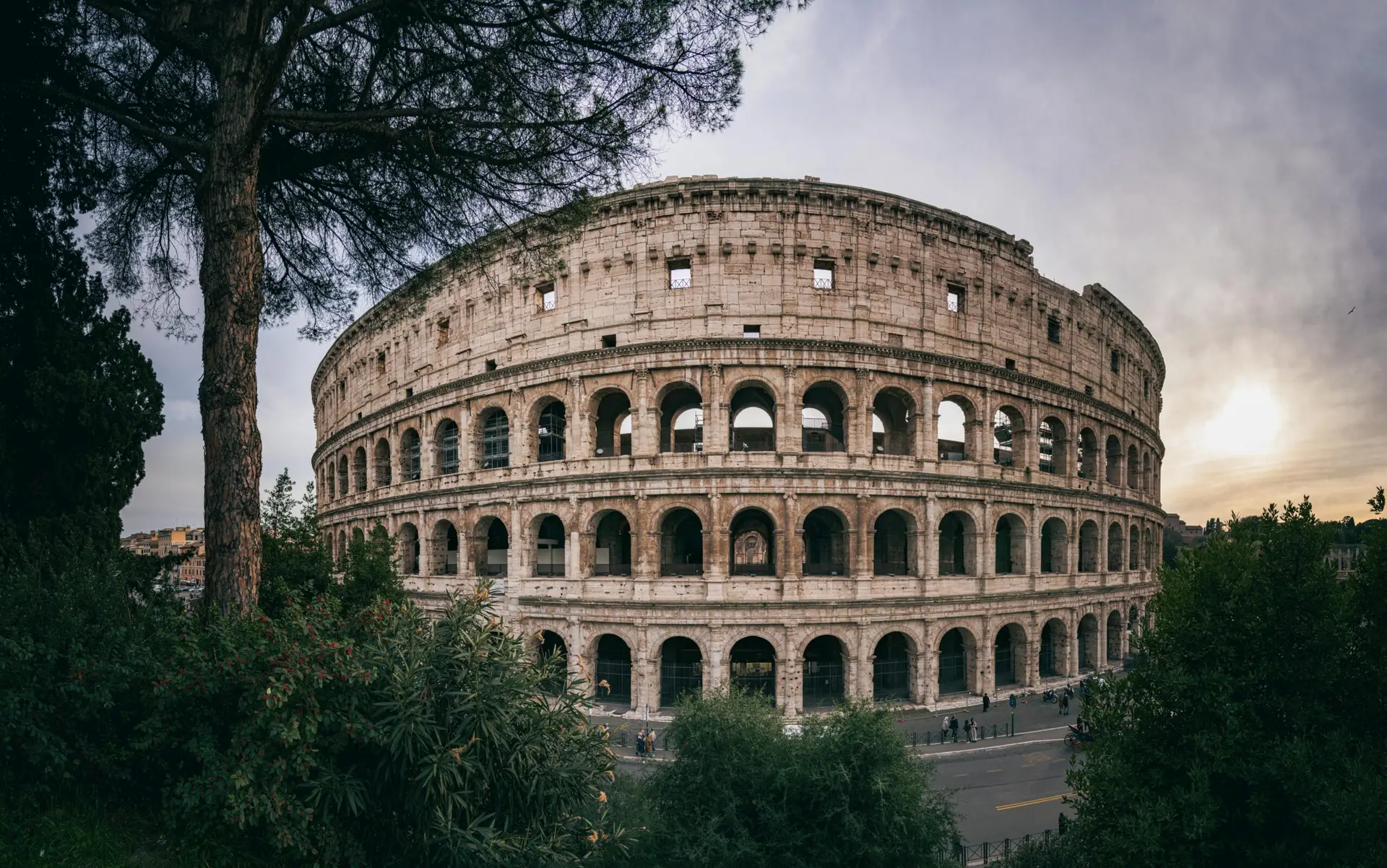
Rome only starts to make sense once you stop trying to conquer it. The city overwhelms people who arrive treating it like a checklist of ruins and piazzas instead of a place that has been continuously lived in for nearly three thousand years. A solo traveler notices the layers differently: the ancient column built into an apartment wall, the neighborhood café operating beside a Renaissance church, the quiet stretch of the Tiber just a few streets away from a packed square. In many ways, Rome still feels like the emotional center of Italy itself — dramatic, layered, chaotic, beautiful, and entirely unwilling to slow down for anyone. Spring, especially, is one of the best times to experience it alone, when the light softens across the stone streets, café tables begin spilling back into the piazzas, and the city feels slightly more open to wandering rather than enduring.
The History of Rome: How It Became What It Is
Rome’s history is so large that most visitors flatten it into a single idea: the Roman Empire. But the city that exists today was shaped by collapse as much as conquest, by religion as much as politics, and by ordinary street life as much as emperors. Rome survives because it kept adapting. Every period left something behind physically, and almost nowhere else in Europe do those layers remain so visible at street level.
The Imperial Capital
Ancient Rome became the center of one of the largest empires in history through infrastructure as much as military power. Roads, aqueducts, law, engineering, administration, and trade turned the city into the political and symbolic heart of the Mediterranean world. The Colosseum, completed in AD 80 under Emperor Titus, was not only an arena but a statement about imperial spectacle and civic identity. The Roman Forum operated as the center of political, religious, and commercial life for centuries. What surprises many first-time visitors is how close these places remain to the modern city. The guide captures this well: Rome’s core still functions at street level around these ancient spaces rather than separating them into isolated monuments.
The Papal City
After the fall of the Western Roman Empire, Rome did not disappear; it transformed. The city became the center of the Catholic Church, and over centuries the papacy reshaped Rome architecturally, politically, and culturally. St. Peter’s Basilica, the Vatican Museums, the great Baroque fountains, and many of the city’s major piazzas emerged from this period of religious and artistic ambition. Rome’s Renaissance and Baroque eras were projects of persuasion as much as beauty. Bernini’s colonnades at St. Peter’s Square, for example, were designed to symbolically embrace visitors entering the Church’s spiritual center. That dual identity — ancient imperial capital and papal capital — explains why Rome feels so visually dense. Different centuries compete for your attention at the same time.
The Modern Roman Contradiction
Modern Rome carries the weight of history unevenly. It is Italy’s capital, a center of government and tourism, and one of the world’s most recognizable cities, but it still often behaves like a collection of neighborhoods rather than a polished global metropolis. That contradiction defines the experience of walking through Rome today. The guide describes Trastevere as busy, noisy, and still slightly unpolished “in the best possible way.” That feeling extends across much of the city. Rome can appear chaotic, delayed, crowded, and improvised, yet that looseness is part of why it remains emotionally alive. The city was never rebuilt into uniformity. It accumulated instead.
What Makes Rome Distinct: Character, Culture & the Solo Experience
Rome’s character comes from coexistence. Ancient ruins stand beside traffic intersections. Laundry hangs above Renaissance streets. Priests, students, office workers, tourists, and lifelong Romans all move through the same piazzas at different rhythms. The city never fully organizes itself for outsiders, and that is exactly what makes it compelling.
Food and public space matter deeply here, but not in the polished way visitors sometimes expect. Rome’s social life spills into streets, cafés, piazzas, trattorie, and evening walks. Meals are not rushed. Coffee is functional and fast. The guide notes correctly that you often will not receive the bill unless you ask for it directly. That detail says something larger about Rome: time belongs less to efficiency and more to presence.
The city also rewards independent movement unusually well. Rome’s historic center unfolds through walking rather than planning. Streets narrow unexpectedly, fountains appear without warning, and entire neighborhoods shift atmosphere within a few blocks. Solo travelers often experience Rome more fully because they can follow curiosity instead of group momentum. A person alone notices details: the echo inside a basilica, the changing light on travertine stone, the quietness of an early-morning street before the city fully wakes up.
Places That Tell Rome’s Story
Together, these places explain why Rome feels less like a museum and more like a city continuously negotiating with its own past.
The Colosseum remains the clearest symbol of imperial Rome’s relationship with spectacle and power. Built under the Flavian emperors in the first century AD, it reflected a society that used architecture and entertainment to reinforce civic identity and imperial authority.
The Roman Forum reveals the administrative and political machinery that once governed much of the Mediterranean world. Walking through it today makes modern Rome feel inseparable from the ancient city beneath it rather than simply inspired by it.
St. Peter’s Basilica expresses Rome’s second great identity as the center of Catholicism. Its enormous scale, Renaissance architecture, and artistic ambition show how the papacy reshaped Rome into a religious capital meant to project spiritual and political influence globally.
The Pantheon may be the most complete physical bridge between ancient and modern Rome. Originally built as a Roman temple and later converted into a church, it demonstrates how Rome survives by adaptation rather than preservation alone.
Trastevere tells the story of everyday Rome better than almost any monument. The neighborhood’s narrow streets, informal evening culture, and layered residential character preserve a version of the city that feels lived-in rather than staged.
Castel Sant’Angelo embodies Rome’s constant reinvention. Constructed originally as Emperor Hadrian’s mausoleum, it later became a papal fortress, military structure, and refuge connected to the Vatican through the Passetto di Borgo escape passage.
Why Rome Rewards the Solo Traveler
Rome rewards solo travelers because the city invites observation rather than consumption. A group often moves through Rome trying to maximize coverage: another church, another monument, another reservation. Alone, the city slows down.
The guide itself quietly reflects this philosophy. It repeatedly encourages walking, pausing, recovering between major sites, and allowing evenings to “extend naturally.” Rome works best when approached that way. The city is too layered to absorb quickly anyway.
Solo travelers also experience Rome more personally because the city is structured around public life. Piazza culture, cafés, fountains, churches, and evening streets all allow you to participate without needing a group structure around you. Sitting alone in Rome rarely feels uncomfortable. In many parts of the city, it feels completely normal.
Most importantly, Rome rewards curiosity. The city constantly reveals itself through details that are easy to miss when moving too fast: a Caravaggio inside an unassuming church, ancient stonework beneath modern apartments, a hidden courtyard beyond a crowded street, or the sound of church bells carrying across the river at dusk. Rome does not ask you to finish it. It asks you to notice it.
48 HOURS IN ROME — THE GUIDE
This article explains Rome. The guide shows you how to move through it properly, with an hour-by-hour structure built around crowd timing, neighborhood flow, realistic walking routes, exact restaurant recommendations, Vatican and Colosseum strategy, local food guidance, and an interactive map designed specifically for independent travelers.
Ready to Go?
Rome becomes far more rewarding once you stop trying to experience all of it at once. Let the city unfold gradually, move through it on foot, and allow enough time for the ordinary details between the landmarks to become part of the trip itself.
48-Hour City Guides
Ready to Go? Grab Your Guide.
Hour-by-hour itineraries built for independent travelers.
London, Paris, Vienna, Prague, Amsterdam and more — $7.99 each.
