If you’re planning a trip to Central Europe, your options are wide. You can wander through romantic Vienna, admire the grand boulevards of Budapest, lose yourself in Berlin’s edgy creativity, or soak up Kraków’s storybook charm. However, there’s one capital that stands out, especially if you’re a lover of Gothic skylines, medieval squares, and fairytale atmospheres. Above all, if you’re a history buff, the Czech capital, Prague, should be at the very top of your list. I personally visited Prague a few years ago, and as a travel writer focused on historical destinations, I assure you this should be your next stop. Here are 10 must-visit historic sites in Prague.
Prague Castle (Pražský hrad)
Founded around 880 by Prince Bořivoj, Prague Castle grew into the seat of Bohemian kings, Holy Roman emperors, and today the Czech president, shaping over a millennium of national history. The vast complex, considered the largest ancient castle in the world, includes highlights like St. Vitus Cathedral, the Old Royal Palace, and Golden Lane. You can explore Romanesque, Gothic, Renaissance, and Baroque architecture across courtyards and gardens, making it both a political symbol and a richly layered cultural landmark.
Charles Bridge (Karlův most)
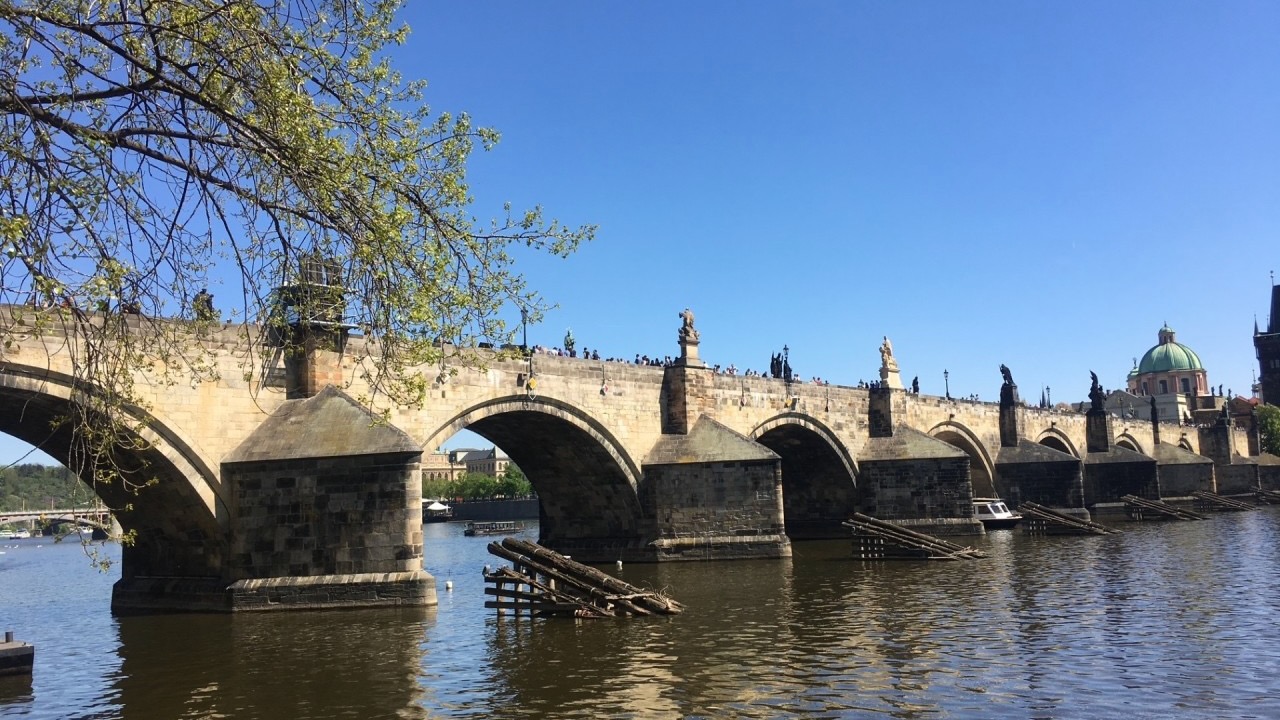
Did you ever think about walking across a medieval bridge that has linked a capital for centuries? Well, one of the most important historic landmarks in Prague you need to see is Charles Bridge. Commissioned by King Charles IV in 1357 to replace the Judith Bridge destroyed by floods, this 516-meter Gothic stone crossing connects Old Town with Lesser Town. Lined with 30 Baroque statues, it offers iconic views of Prague Castle and the Vltava River. Visit at sunrise to avoid crowds, watch street musicians, climb the Old Town Bridge Tower for views, and touch the St. John of Nepomuk plaque for tradition.
The Astronomical Clock (Orloj)
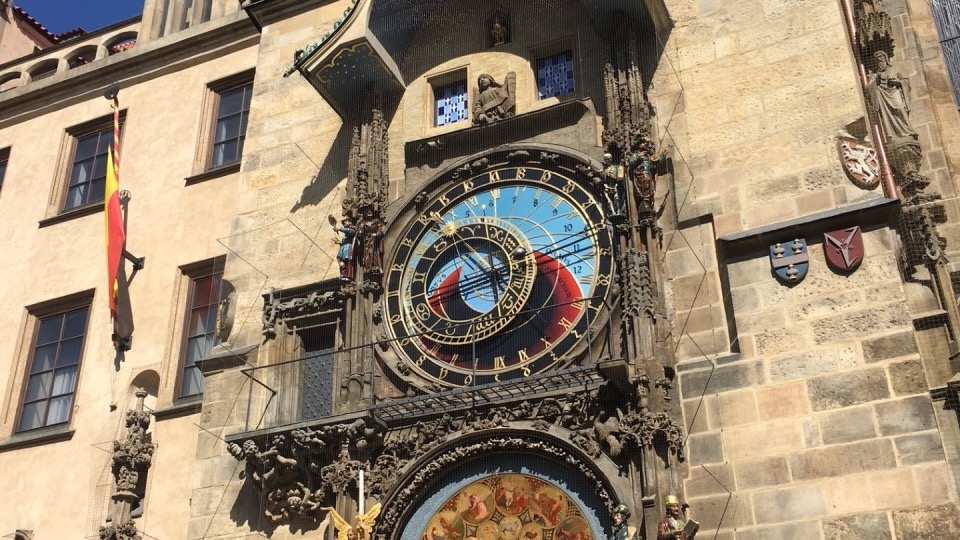
First installed in 1410, Prague’s Astronomical Clock is a living medieval spectacle that has mesmerized visitors for over six centuries. Mounted on the Old Town Hall, its intricate mechanism tracks Babylonian time, Old Czech time, solar and lunar cycles, and zodiac signs, reflecting the scientific imagination of the Middle Ages. Every hour, crowds gather to watch the mechanical procession of the Twelve Apostles, while the figure of Death tolls a bell. Take time to study the detailed calendar dial below, then head up the tower for sweeping views over Old Town Square.
St. Vitus Cathedral
This one is a must-see during your visit to Prague because it is the spiritual and architectural heart of the Czech Republic. St. Vitus Cathedral, located inside Prague Castle, began construction in 1344 under King Charles IV and was not fully completed until 1929, reflecting centuries of Gothic design and national ambition. It has hosted royal coronations, burials of Bohemian kings, and key state ceremonies, making it central to Czech identity. Inside, you should look for the stained-glass windows by Art Nouveau artist Alfons Mucha, the tomb of St. Wenceslas, and the Crown Jewels chamber. It’s recommended to climb the South Tower for panoramic views and combine the visit with other castle highlights.
Vyšehrad Fortress
Now this landmark is definitely a must-visit during your trip to Prague, offering deep historical roots and sweeping river views. According to tradition, Vyšehrad was one of Prague’s earliest settlement sites, later developed into a royal residence before becoming a Baroque military fortress in the 17th century. Today, you can explore the neo-Gothic Basilica of St. Peter and St. Paul, the historic Vyšehrad Cemetery where notable Czech figures are buried, and fortified ramparts overlooking the Vltava River. Walk the peaceful park paths, visit the underground casemates, and come near sunset for panoramic city views without central crowds. Easily reached by metro or riverside tram routes.
Jewish Quarter (Josefov)
Few districts in Europe preserve Jewish history as powerfully as Prague’s Josefov, a compact area shaped by centuries of resilience, loss, and cultural influence. Established as a walled ghetto by the 13th century, it became a center of Jewish scholarship before large parts were rebuilt in the late 19th century. Go there to see the Old Jewish Cemetery, founded in the 1400s with thousands of layered graves, and the Old-New Synagogue from around 1270, one of Europe’s oldest active synagogues. The Jewish Museum complex connects several historic sites through a single ticket.
Old Town Square (Staroměstské náměstí)
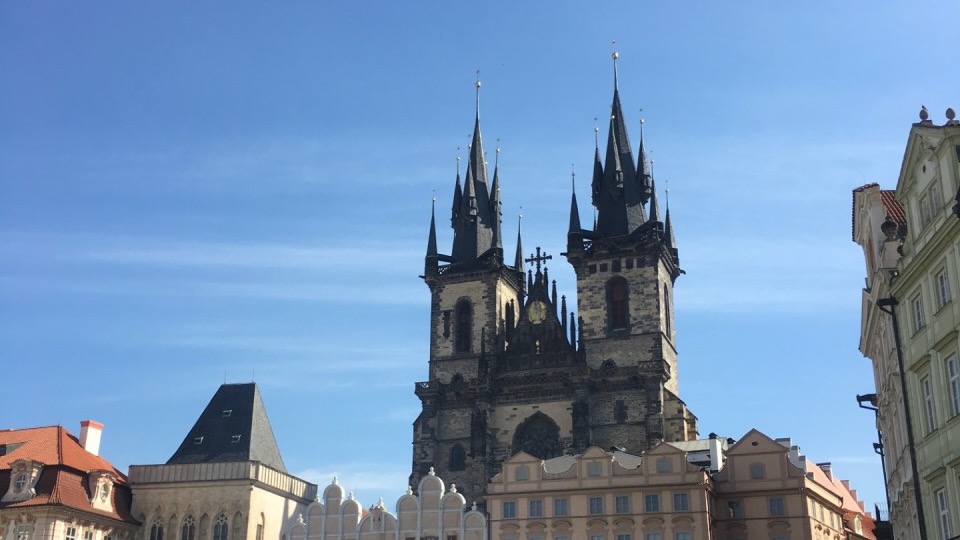
Dating to the 12th century, Old Town Square developed as Prague’s main medieval marketplace and remains one of Central Europe’s most intact historic plazas. Surrounded by Gothic, Renaissance, and Baroque landmarks, it anchors key sights such as the Astronomical Clock, Church of Our Lady before Týn, and Old Town Hall Tower. The square also witnessed major events, including the 1621 execution of Czech nobles. It’s advised to head to the square early morning or late evening for fewer crowds. You can also climb the tower for panoramic views and explore nearby narrow lanes.
Powder Tower (Prašná brána)
Rising dramatically at the edge of Prague’s Old Town, the Powder Tower is one of the city’s most striking Gothic gateways and a bold reminder of its medieval defenses. Construction began in 1475 under King Vladislaus II, marking the starting point of the historic Royal Route used for coronation processions toward Prague Castle. Later used to store gunpowder, it gained its current name in the 17th century. Climb the 186-step spiral staircase to a viewing gallery for sweeping Old Town vistas. Admire the richly carved façade, then continue along Celetná Street. Visit early morning or late afternoon to avoid crowds and capture dramatic light on its dark stone exterior.
Strahov Monastery
Founded in 1143 by the Premonstratensian order, Strahov Monastery stands as one of Prague’s oldest religious institutions and a quiet intellectual center near Prague Castle. Its highlight is the Strahov Library, featuring the Baroque Theological Hall (1670s) and the Philosophical Hall (18th century), both richly decorated with frescoed ceilings and historic globes. You will also find a small gallery and monastery brewery. Purchase a combined ticket for access, respect photography rules, and take time to enjoy nearby viewpoints overlooking Prague’s skyline.
Dancing House (Tančící dům)
Standing out sharply against Prague’s historic skyline, the Dancing House represents the city’s modern architectural turn after the fall of communism. Completed in 1996 and designed by Frank Gehry and Vlado Milunić, its flowing, curved form earned the nickname “Fred and Ginger,” after the famous dancers. Built on a site damaged during World War II bombings, it symbolizes renewal and creative freedom. You can head to the top-floor restaurant and terrace for panoramic views over the Vltava River, explore the small gallery, and photograph its unique façade. Visit at sunset for the best light and fewer crowds.
48-Hour City Guides
Ready to Go? Grab Your Guide.
Hour-by-hour itineraries built for independent travelers.
London, Paris, Vienna, Prague, Amsterdam and more — $7.99 each.
