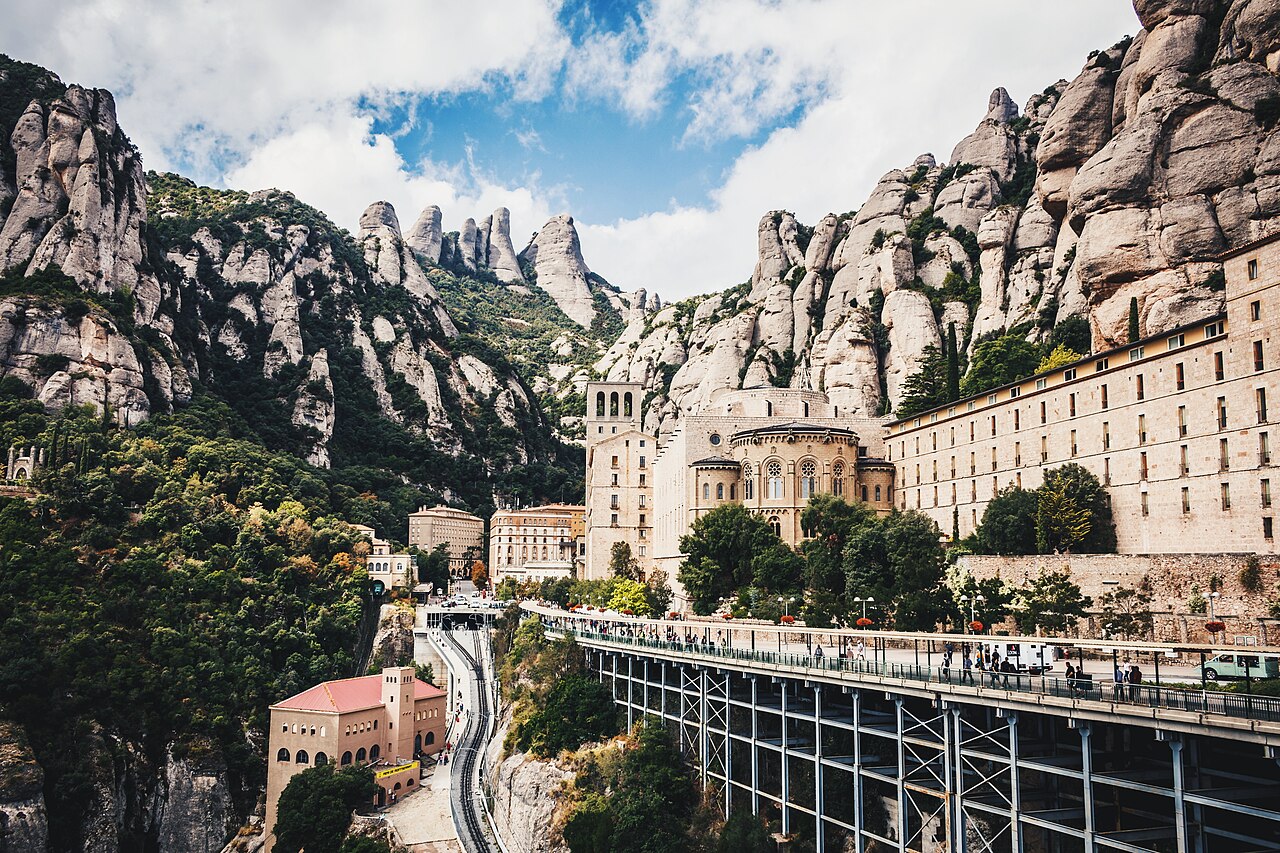
Barcelona is one of Europe’s most powerful cultural magnets. In 2025 alone, the city welcomed around 16 million visitors, contributing to a wider regional total of 26.1 million tourists and over €14 billion in economic impact, with more than 56 million overnight stays recorded across the destination. Add to that world-famous architecture, eight UNESCO sites, Mediterranean beaches, and a thriving food and arts scene, and it’s easy to see why it sits at the heart of Spain’s record-breaking tourism boom.
But here’s the thing. It’s not all in Barcelona. Step just a little outside the city, and you’ll find an entirely different side of Catalonia. If you’re into history and culture, these day trips are where things get even more interesting.
1. Montserrat – Sacred Mountain & Monastery
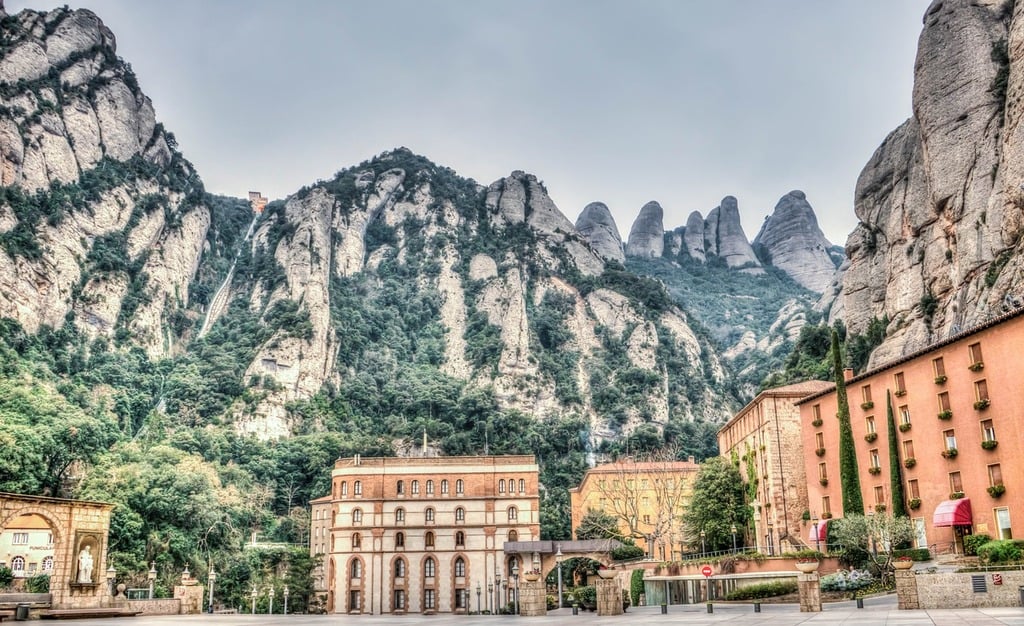
From Barcelona, Montserrat is about an hour away and easy to reach by taking the R5 train from Plaça d’Espanya to either Aeri de Montserrat (cable car) or Monistrol de Montserrat (rack railway). Both options connect directly to the monastery and offer sweeping views on the way up. The site itself dates back to the 11th century and centers around the Basilica, home to La Moreneta (the Black Madonna), a key religious symbol in Catalonia. Plan time for the Escolania boys’ choir if they’re performing, and visit the small museum with works by El Greco and Picasso. Walking trails around the monastery lead to viewpoints and hermitages.
2. Tarragona – Roman Spain at Its Peak
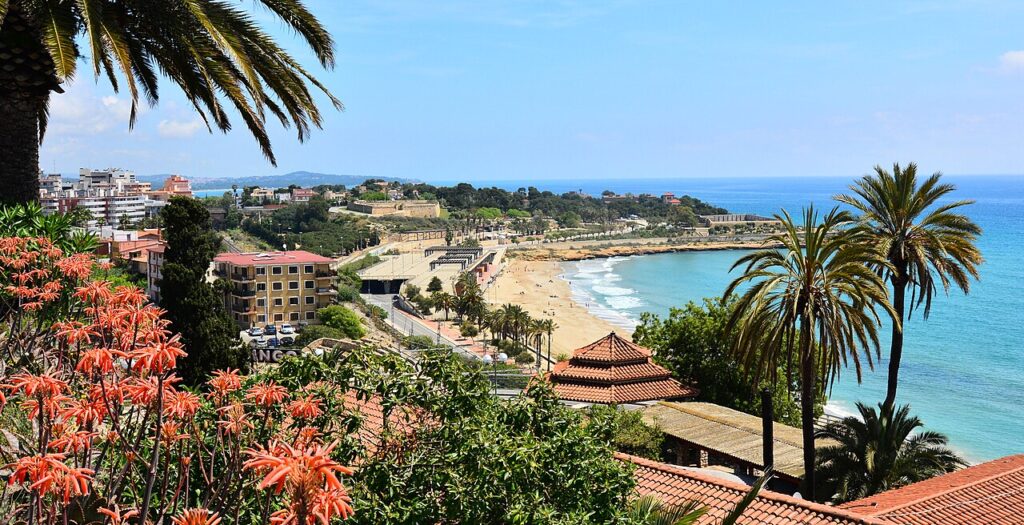
If you’re even slightly into Roman history, Tarragona is the kind of place that makes you slow down and actually look around. It’s just over an hour from Barcelona by train, and once you arrive, everything is within walking distance. Start at the amphitheater, set right by the sea, then move through the Roman circus and forum, which are far more extensive than most people expect. This was once Tarraco, a major Roman capital, not a minor outpost. The old town above it layers medieval streets over ancient foundations, so you’re constantly moving between eras without trying. No need for overplanning here. Just follow the ruins, and the story of the city unfolds naturally.
3. Girona – Medieval & Jewish Heritage
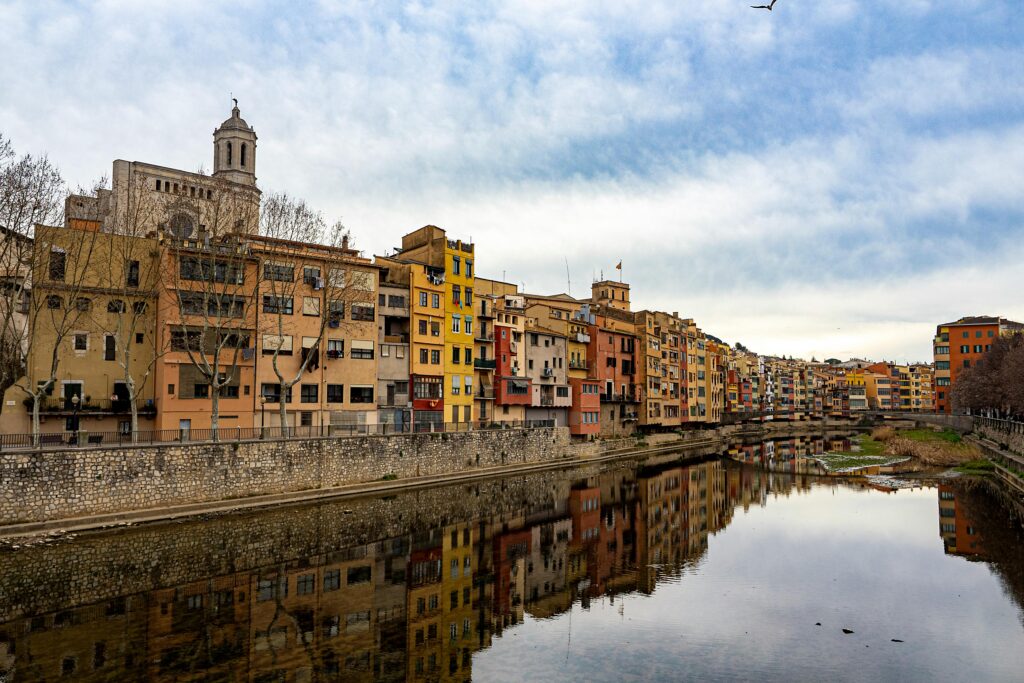
Girona is one of the easiest day trips from Barcelona: high-speed trains from Sants take around 40 minutes, while regional trains run closer to 1h30. Once you arrive, the historic center is a short walk from the station. Start in El Call, the remarkably preserved Jewish Quarter, with narrow stone alleys that date back to the Middle Ages. From there, head up to the cathedral. Its massive nave is one of the widest Gothic spaces in Europe, then walk the medieval city walls for a full view over the old town. The Onyar River, lined with colorful houses is magnificent to witness. Everything here is compact, walkable, and deeply tied to centuries of religious and cultural history.
4. Figueres – Dalí’s Surreal World
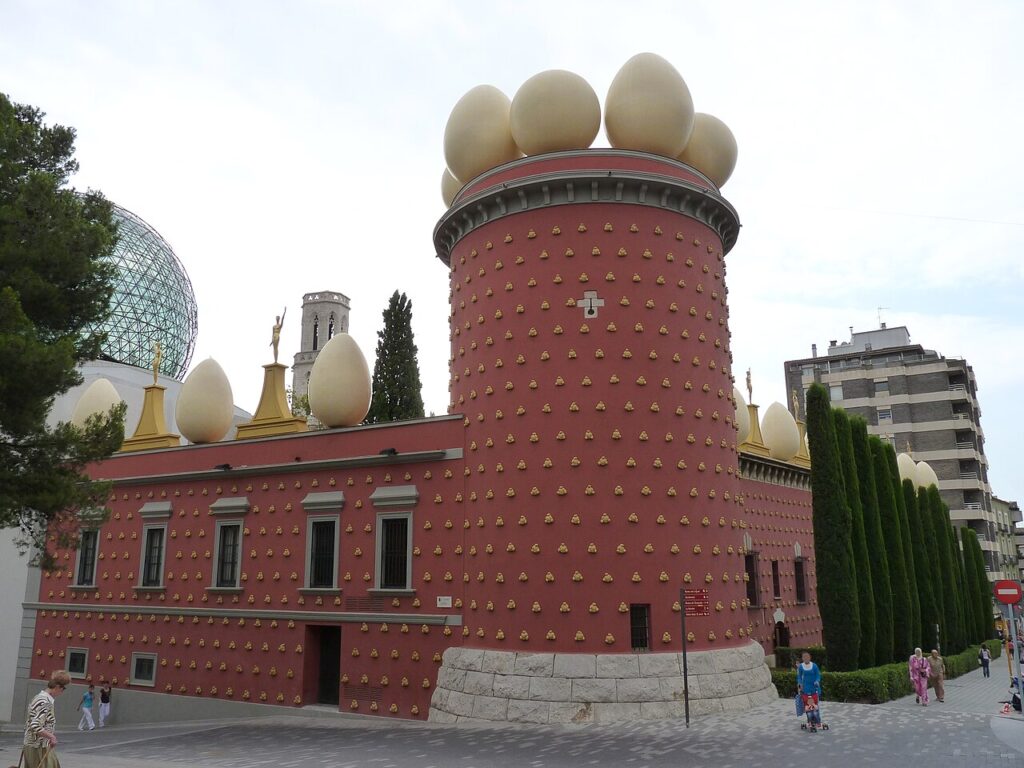
Figueres sits about 55 minutes from Barcelona by high-speed train (AVE) or roughly 2 hours by regional train, making it an easy day trip if you start early. The main draw is the Dalí Theatre-Museum, designed by Salvador Dalí himself and built on the ruins of a former theater. It’s less a museum and more a full immersion into his mind. You’ll move through surreal installations, optical illusions, and rooms that blur art and architecture. Afterward, walk over to the massive 18th-century Sant Ferran Castle, one of Europe’s largest fortresses, for a completely different historical layer. Figueres works well because it combines modern art significance with deeper military and regional history in one compact stop.
5. Sitges – Culture by the Sea
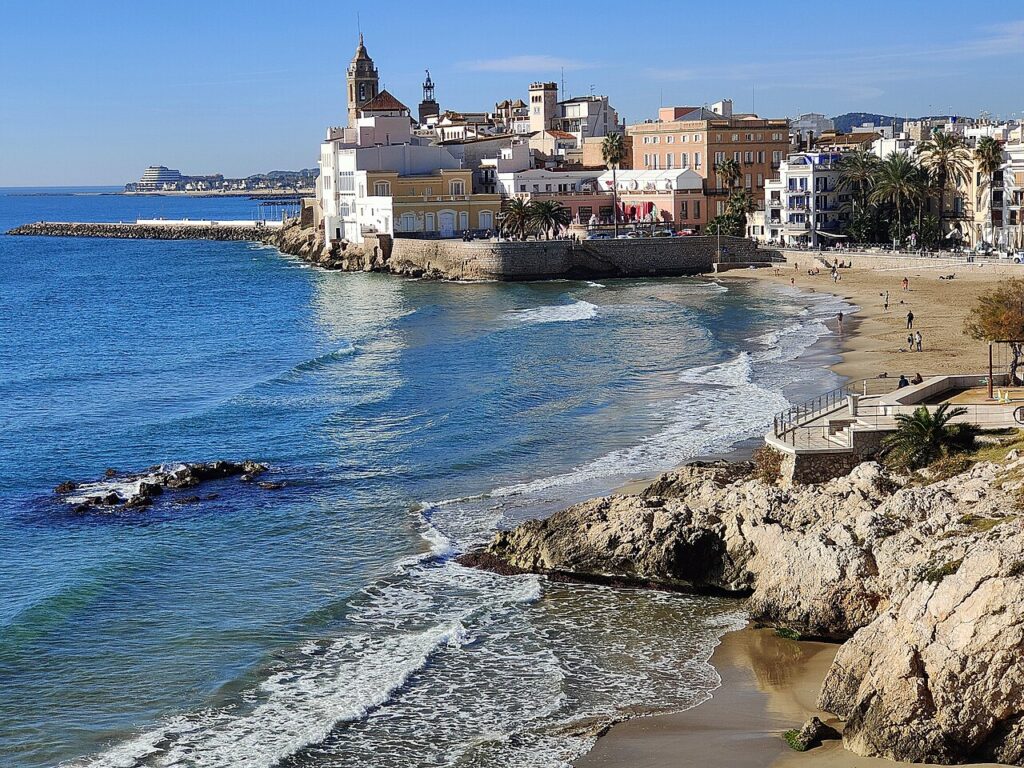
Sitges is the kind of place that proves a beach town can have serious cultural depth. It’s just 35–40 minutes from Barcelona by train, with frequent departures from Sants and Passeig de Gràcia, so you can be by the sea before you even finish your coffee. Head straight into the old town: whitewashed streets, sharp turns, and that iconic church perched above the water. Then get into the good stuff: Museu del Cau Ferrat, once home to artist Santiago Rusiñol, packed with modernist works and personal collections that actually shaped Catalonia’s art scene. Add the Maricel Museum for a broader sweep of history. Walk the promenade, dip in the water if you want, but this one’s about culture with energy, not just sun.
6. Colònia Güell – Gaudí Without the Crowds
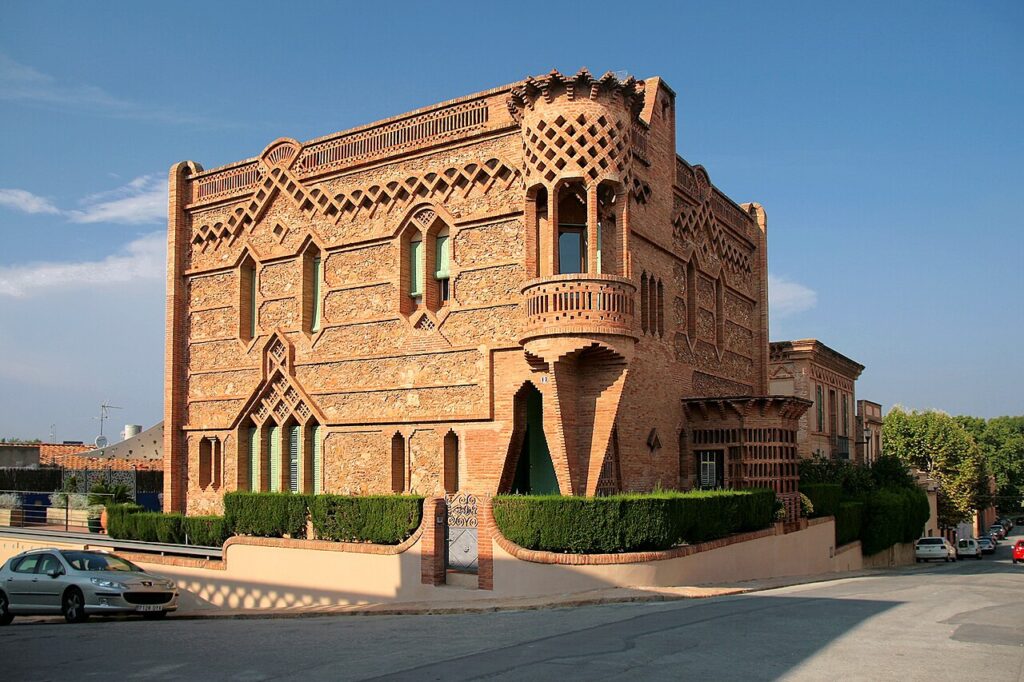
Colònia Güell is one of the easiest, and most overlooked, day trips from Barcelona. Take the FGC train (S33, S8, or S4) from Plaça d’Espanya and you’ll be there in about 20 minutes, followed by a short walk into the village. This was a purpose-built industrial colony for textile workers in the late 19th century, and it still feels intact. The highlight is Gaudí’s Crypt, a UNESCO-listed site where he tested structural ideas later used in the Sagrada Família. Look closely at the tilted columns and organic shapes. Beyond that, walk through the workers’ houses, school, and cooperative buildings to understand how industrial life was organized at the time.
7. Vic – Traditional Catalonia
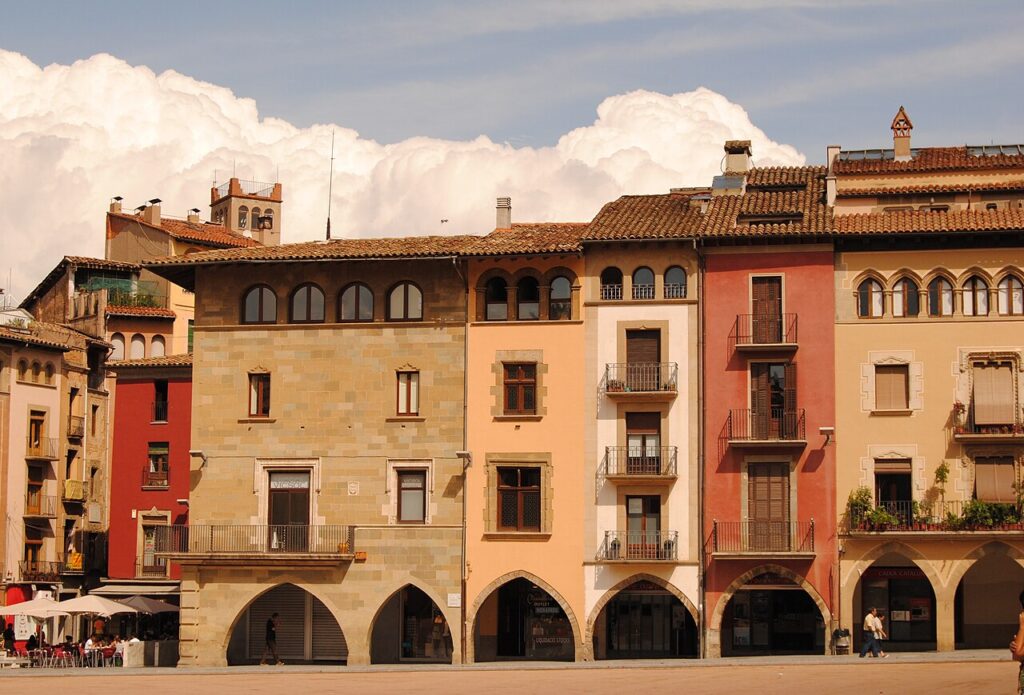
Vic sits about 1 hour from Barcelona by direct train from Sants or Passeig de Gràcia, making it a straightforward day trip with a very different feel from the coast. The town centers around Plaça Major, a large historic square that still hosts weekly markets. Go on a Tuesday or Saturday to see it at its most active. From there, walk to the cathedral, which blends Romanesque foundations with later Gothic and neoclassical additions, then explore the narrow streets that connect it all. The Episcopal Museum is worth a stop if you’re interested in medieval religious art. Vic stands out for how local it feels: less curated, more lived-in, offering a clear look at Catalan traditions, architecture, and daily life.
48-Hour City Guides
Ready to Go? Grab Your Guide.
Hour-by-hour itineraries built for independent travelers.
London, Paris, Vienna, Prague, Amsterdam and more — $7.99 each.
