I have repacked the same carry-on bag so many times that I could do it in the dark. And I have made enough mistakes over the years to know exactly what belongs in it and what does not.
This is not a list built for a travel influencer who checks four bags and calls it minimalist packing. It is the list I use when I am heading to Europe for two weeks, traveling solo, moving between cities, and carrying everything myself.
If you are over 50, you will recognize some of what is here. Your priorities shift. Comfortable feet matter more than fashionable ones. Having your medications accessible is not optional. And the days of hauling a checked bag through cobblestone streets or up four flights of stairs in a pension with no elevator are officially over.
Here is what I bring.
The bag itself
I use a 40-liter carry-on backpack that fits in most European overhead bins and budget airline seat gauges. This size hits the sweet spot: large enough for two weeks’ worth of clothes, small enough to avoid checked-bag fees and the agony of baggage claim.
Whatever bag you choose, make sure it opens flat like a suitcase. That feature alone saves significant time when you need to find something at the bottom.
Clothing
The goal is a seven-day wardrobe that you wear twice. That math gets you through two weeks.
- 5 shirts or tops (mix of casual and one slightly nicer option for dinners)
- 2 pairs of pants or trousers (one casual, one that can pass as smart)
- 1 lightweight layer (a packable zip-up or cardigan)
- 1 rain jacket that compresses small
- 7 pairs of underwear (merino wool if your budget allows — they dry overnight and resist odor)
- 5 pairs of socks, including at least two pairs of compression socks
- 1 pair of walking shoes you have already broken in
- 1 pair of comfortable sandals or slip-ons for evenings or long travel days
- Sleepwear (a light set or whatever you actually sleep in)
- 1 swimsuit if your itinerary calls for it
A note on shoes: this is not the trip to debut new footwear. Blisters in Rome are not a travel story — they are a ruined week. Wear your walking shoes for at least a month before you leave.
Toiletries and health
TSA rules mean liquids go in a quart-sized bag. Most hotels and Airbnbs in Europe have shampoo and body wash, so I pack small.
- Shampoo bar or small bottle
- Conditioner (small)
- Toothbrush and toothpaste
- Deodorant
- Sunscreen (SPF 50 — European sun is real)
- Moisturizer with SPF for face
- Lip balm
- Any medications in their original packaging, with a printed list of what you take and why
- Extra supply of prescriptions (I bring at least five extra days worth)
- Pain reliever, antidiarrheal, and antacid
- Blister treatment (gel pads, not just bandages)
- Compression socks for travel days (I mention them twice because they matter that much)
- Small first aid kit with bandages and antiseptic wipes
- Hand sanitizer
If you take any controlled substances, check the regulations for every country on your itinerary. Some medications legal in the U.S. require documentation or special permits in Europe. Your prescribing doctor can provide a letter explaining your medical needs — get one before you go.
Technology and documents
- Phone with an international plan or eSIM activated before departure
- Power bank (I use one that can charge my phone twice)
- Universal power adapter (Europe uses Type C plugs; some older places in the UK still use Type G)
- Charging cables for everything you are bringing
- Earbuds or headphones with noise canceling
- E-reader loaded with books
- Small crossbody bag or day bag for sightseeing
For documents, I go both analog and digital.
- Passport (valid for at least six months past your return date)
- Driver’s license as a backup ID
- Printed copies of hotel confirmations, flight details, and rail tickets
- Travel insurance card and emergency number
- Emergency contact list on paper, not just in your phone
- Digital copies of everything saved in cloud storage and emailed to yourself
The carry-on personal item
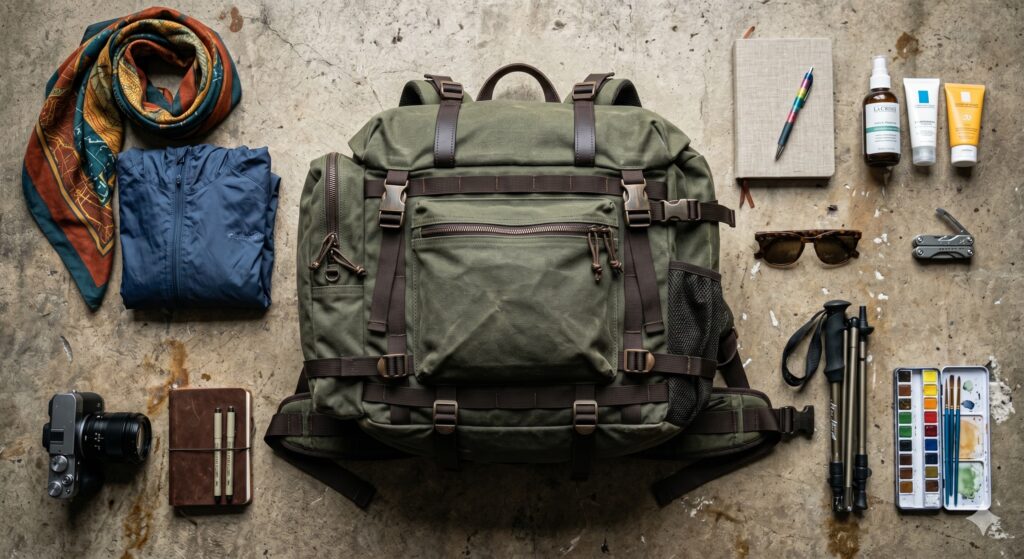
Most airlines allow a personal item in addition to your carry-on. I use a packable daypack that compresses into its own pocket when not in use. On travel days it rides on top of or inside my main bag. Once I arrive, it becomes my daily sightseeing bag.
What I leave at home
This is where most overpacking happens.
I skip the full-size umbrella—a packable one fits right in my daypack. I don’t bother with a hair dryer either; hotels always have them, or you can just grab one from the front desk. Guidebooks are a thing of the past since my phone handles everything. Most importantly, I never pack more than two weeks’ worth of gear, and I definitely don’t carry “just in case” clothes.
The honest truth: I have never once wished I had packed more. I have absolutely wished I had packed less.
One thing worth saying
Two weeks in Europe on one carry-on is completely doable at any age. The logistics get easier the more you do it, and you will find your own version of this list over time. But starting here means you are not reinventing the wheel — you are just walking away from baggage claim for the last time.
That part never gets old.
Bryan Wolfe is a solo traveler and Fora Travel Advisor. He publishes GoingSolo.Life for travelers 50 and over who are done waiting for the right time to go.
48-Hour City Guides
Ready to Go? Grab Your Guide.
Hour-by-hour itineraries built for independent travelers.
London, Paris, Vienna, Prague, Amsterdam and more — $7.99 each.
