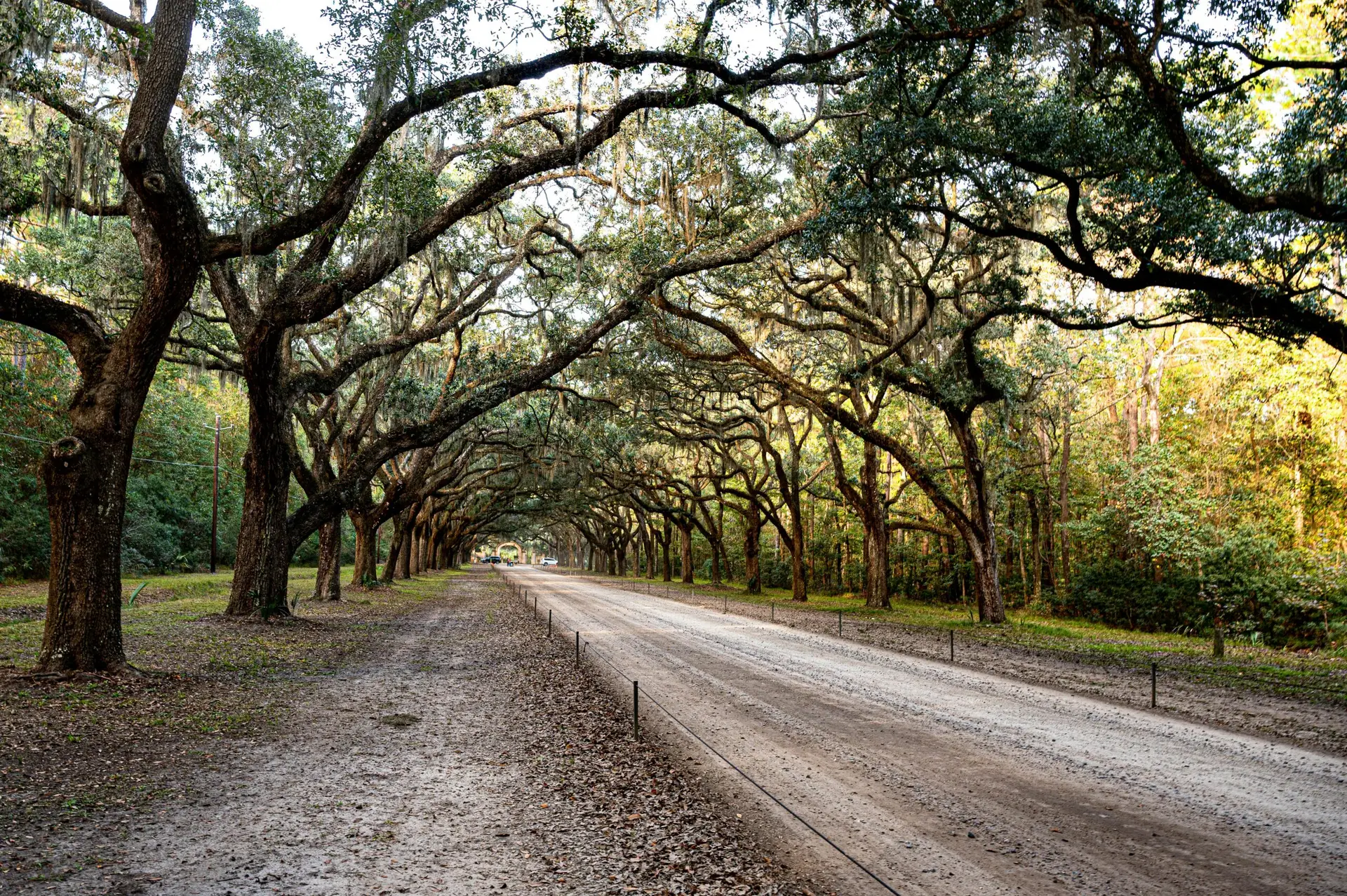
Savannah was designed not to be forgotten. In 1733, James Oglethorpe laid out a unique grid of squares. Twenty-four of these squares survive intact today. Each one is a small park at a street intersection, shaded by live oaks trailing Spanish moss.
This layout is one of the most considered pieces of urban planning in American history. More than anything else, it shapes the experience of walking the city. You can get lost here, but you can never get disoriented. The squares are always there, organizing the light, the shade, and the distance between things. For a solo traveler who wants to wander with intention, Savannah is close to perfect.
The History of Savannah: How It Became What It Is
The Planned City
James Oglethorpe founded Georgia’s first city in February 1733 with a specific urban vision: a city of squares, each surrounded by equal lots for homes and commerce, separated by public green space. The plan was radical for its time — most colonial settlements grew without forethought, following topography and expediency. Savannah was designed from the first day as a social experiment in ordered civic life. Oglethorpe’s original ward contained four trust lots reserved for civic buildings and four tithing lots for residences, arranged symmetrically around a central square. The plan was intended to be replicated indefinitely as the city grew, and it was: from four squares to twenty-four, each a variation on the same democratic organizing principle. It remains, as architects and urban planners have noted for two centuries, one of the great contributions to American city design.
Cotton, Commerce, and the Cost
By the early 19th century, Savannah was one of the wealthiest cities in the American South — a cotton port whose factor houses lined the bluffs above the Savannah River, processing and trading the output of inland plantations worked by enslaved people. The physical infrastructure of this economy is still visible: Factor’s Walk, the iron-bridged commercial corridor above River Street, is essentially intact. The prosperity it generated built the Greek Revival and Italianate mansions that line the squares — the architecture that defines Savannah’s visual character today. That architecture is inseparable from the economy that built it, and the history of Savannah is inseparable from this fact. The First African Baptist Church, organized in 1773 and one of the oldest Black congregations in North America, was founded by enslaved people with official permission to assemble — a history that speaks to the specific, daily negotiations of power in this city.
Sherman’s Gift
In December 1864, General William T. Sherman ended his March to the Sea by capturing Savannah. Then, famously, he did not burn it. The city surrendered rather than resist, and Sherman sent a telegram to President Lincoln offering Savannah as a Christmas gift. The decision preserved what Atlanta and much of the rest of Georgia lost: the antebellum city, more or less intact. This is why Savannah looks the way it does. The preservation was not philosophical — it was the accidental consequence of a practical military calculation. But the result is a city that carries its full 19th-century fabric in a way that most Southern cities cannot, and which has spent the decades since learning to understand and maintain what it accidentally kept.
What Makes Savannah Distinct: Character, Culture & the Solo Experience
Savannah moves at a pace that is not laziness but deliberateness. The city knows what it has — the squares, the moss, the layered history — and it does not rush past any of it. Locals call Savannah the “Hostess City of the South,” a phrase that sounds like tourism copy until you’ve spent an afternoon in one of the squares and had three separate conversations with people who had no particular reason to talk to you except that you were sitting there.
The squares are the key to Savannah’s social culture. Each one is a different neighborhood gathering point — some formal, some worn by daily use, some anchored by monuments and some simply by benches under the oak canopy. They are not tourist attractions in the way that most “must-see” places are. They are where people eat lunch, walk their dogs, sit with their phones, and watch the afternoon change. The solo traveler who finds a square in the late afternoon and simply sits in it has arrived at the essence of Savannah before visiting a single museum.
The city has a well-cultivated reputation for being haunted, built on the genuine density of its burial history — thousands were buried beneath the squares during yellow fever epidemics in the 19th century — and on the willingness of its residents to maintain the story. The ghost tours are atmospheric; some are genuinely interesting. But they are all, to some degree, beside the point. Savannah is atmospheric enough without the theater.
Places That Tell Savannah’s Story
Forsyth Park. The largest of Savannah’s public spaces, anchored by a fountain that is the most photographed image in the city. What it tells you is not decorative but structural: this is a city that chose, repeatedly, to allocate its most valuable central land to public space rather than commerce.
Bonaventure Cemetery. Three miles from the historic district, on a bluff above the Wilmington River, Bonaventure is one of the most beautiful cemeteries in America — live oaks arching over elaborate Victorian monuments, the graves of people who shaped the city over two centuries.
First African Baptist Church. Founded in 1773 by enslaved people, the church on Montgomery Street has a floor with diamond-shaped ventilation holes cut by enslaved people who used the space beneath it as a stop on the Underground Railroad. The history here is not behind glass. It is in the floor under your feet.
Factor’s Walk. The ironwork-bridged commercial corridor above River Street was where cotton merchants conducted business throughout the 19th century — the physical form of an economy that shaped everything Savannah became. The buildings are now restaurants and shops, but the structure remains.
Wormsloe Historic Site. Five miles south of the city, the avenue of live oaks leading to the ruins of Noble Jones’s 18th-century fortified estate is one of the most photographed roads in Georgia and one of the oldest standing structures in the state.
The Cathedral of St. John the Baptist. Built in 1876, rebuilt after a fire in 1898, the French Gothic cathedral on Lafayette Square is among the most impressive religious buildings in the American South — twin-spired, vast, and entirely unexpected in scale for a city of Savannah’s size.
Why Savannah Rewards the Solo Traveler
Savannah is, structurally, one of the best American cities for the solo traveler who wants to wander. The squares provide constant reference points — you always know roughly where you are, there is always shade, and there is always somewhere to sit and be in the city without consuming anything or being anywhere in particular. The pace is accommodating. The social culture is genuinely open. The history is present in a way that rewards attention without demanding effort.
The city also has a particular quality in the evening — when the light goes gold through the moss and the squares go quieter and the restaurants along Congress Street fill with people who are not in a hurry — that makes the solo traveler feel, not lonely, but exactly as alone as they chose to be. That distinction is one that experienced solo travelers will recognize. Savannah consistently delivers it.
Guide Preview
48 HOURS IN SAVANNAH — THE GUIDE
This article gives you Savannah’s frame. The 48 Hours in Savannah guide gives you the trip: a full two-day sequence built for the solo traveler. You also get Lowcountry restaurant picks with prices, waterfront logistics, and the interactive map with all pinned locations.
Get the 48 Hours in Savannah guide → $7.99
Browse all 48-Hour Guides at GoingSolo.Life/guides/
Ready to Go?
Savannah rewards the traveler who slows down. Arrive with context, and the moss and the monuments start to mean something. B
48-Hour City Guides
Ready to Go? Grab Your Guide.
Hour-by-hour itineraries built for independent travelers.
London, Paris, Vienna, Prague, Amsterdam and more — $7.99 each.
