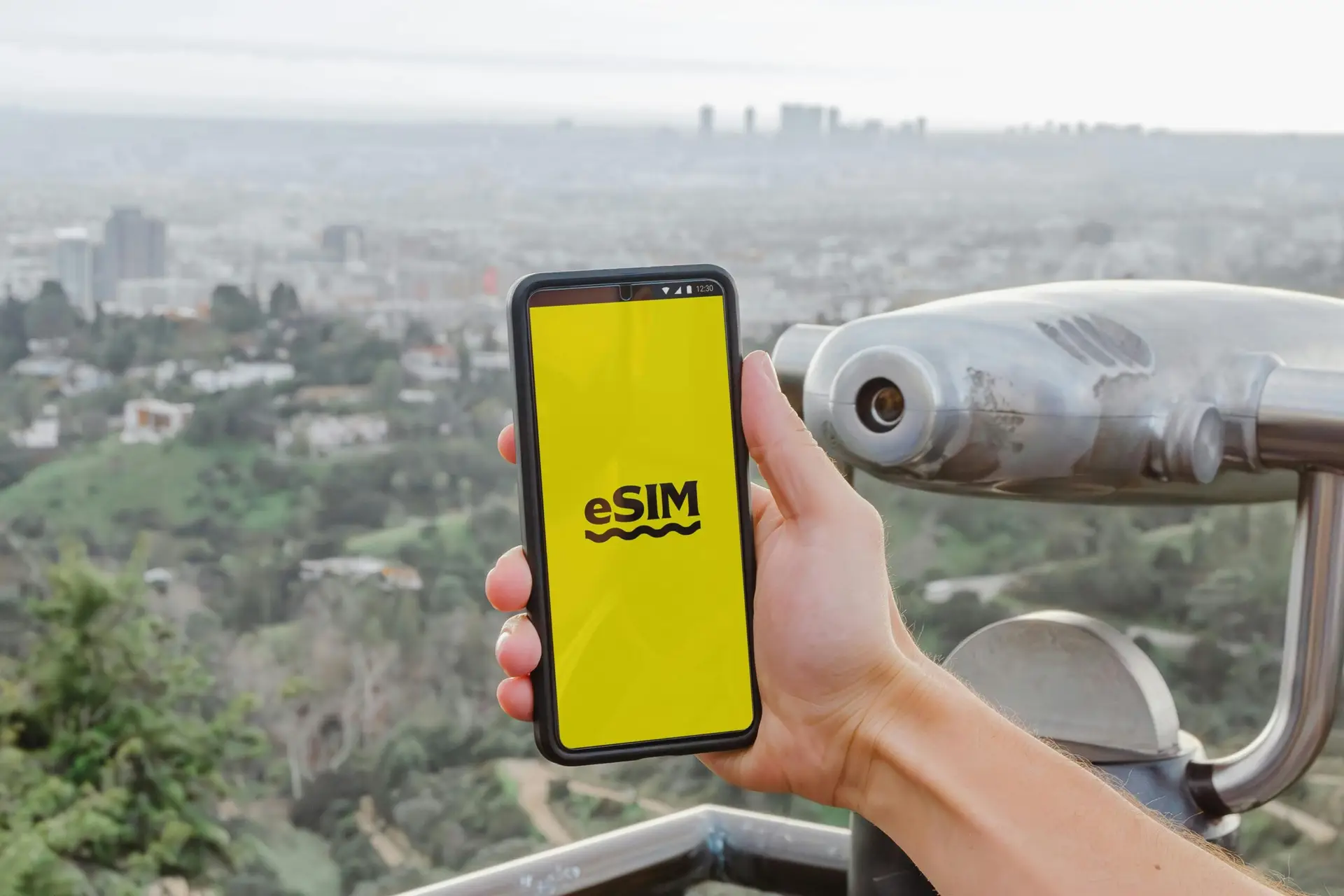
The first time you arrive somewhere and your phone just works — no scramble for a SIM card, no standing at a phone store with a language barrier, no data plan that doesn’t activate until day two — you will wonder why you didn’t switch years ago. For solo travelers, staying connected isn’t a convenience. It’s what lets you navigate, translate, and find your way back when you’ve taken one wrong turn too many in an unfamiliar city.
What an eSIM Actually Is
An eSIM is a digital SIM card built directly into your phone. Instead of inserting a small physical card, you download a carrier profile — essentially a set of network credentials — and your phone connects to a local network as if it had a local SIM. The ‘e’ stands for embedded. The technology works exactly like a physical SIM; it just doesn’t require one.
eSIM support has been standard in flagship smartphones since around 2018, and most mid-range phones have followed. A competitive market of eSIM providers has driven prices down to where buying a travel data plan before you leave home is both simple and affordable — often cheaper than the roaming charges you were paying before.
Check first: Not every phone supports eSIM, and some carrier-locked phones block the feature even when the hardware supports it. Go to Settings → About (or General → About on iPhone) and look for an EID number. If it’s there, your phone supports eSIM. If you’re unsure, search your phone model + ‘eSIM support’ before you buy a plan.
Why It Matters More for Solo Travelers
When you travel with other people, connectivity is a shared problem. One person has data, they navigate; the logistics sort themselves out. When you’re alone, your phone is your lifeline — for maps, translation, finding the café that closes at 2pm, calling a cab when the last tram has gone.
The traditional solution — buying a physical SIM card on arrival — works, but it has friction. You need to find a carrier store or kiosk, staff may not speak English, activation can take hours, and if something goes wrong you’re at the mercy of store opening hours. Some European countries require passport registration for tourist SIMs, which adds another step on a day when you’d rather be somewhere else.
The eSIM removes almost all of that friction. You buy the plan before you leave home, scan a QR code, and your phone is ready when the wheels touch the runway.
What to Look For When Buying a Travel eSIM
Coverage area. Most travel eSIM providers offer regional plans (Europe, Schengen Area, 30+ countries) as well as country-specific plans. If you’re visiting multiple countries on one trip, a regional plan almost always makes more sense than buying individual country plans as you go.
Data volume. For a 7–14 day trip with moderate use — maps, messaging, occasional video calls home — 5GB is usually sufficient. If you’re navigating heavily, streaming, or working remotely while you travel, plan for 10–15GB.
Validity period. Most plans activate when you first connect to a local network, not when you purchase them. They then run for a fixed number of days — 7, 15, 30. Match the validity to your trip length, not your purchase date.
Data only vs. voice + data. Most travel eSIMs provide data only. For most travelers, that’s fine — WhatsApp, FaceTime Audio, and similar apps handle calls over data. If you need a traditional phone number (for booking reservations that require a callback), look specifically for a plan that includes a local number.
Customer support. This matters more than it sounds. If your eSIM fails to activate at 11pm before a travel day, you want a provider with 24/7 chat support. Check reviews specifically for responsiveness — not just price.
Providers Worth Knowing
Airalo is the largest eSIM marketplace and offers both country-specific and regional European plans. The app is straightforward, pricing is competitive, and support is generally responsive. A 10GB Europe plan typically runs $20–25.
Holafly offers unlimited data plans at a flat rate — currently around $27 for 5 days in Europe — which removes any anxiety about tracking usage. A good option for heavy users or anyone who prefers not to monitor consumption.
Nomad is a solid alternative with competitive pricing and good European regional coverage. Worth comparing against Airalo for your specific itinerary — prices vary by region.
Your existing carrier. T-Mobile and AT&T both offer international add-ons that include eSIM data abroad. If you’re already a customer, check your current plan before buying a separate travel eSIM — you may have coverage you’re not using.
A Practical Note on Calls and Texts
Most travel eSIMs don’t give you a local phone number, which means standard SMS and voice calls won’t work on that plan. In practice, this affects almost nothing — hotels and most businesses accept WhatsApp, and your U.S. number still works for authentication texts (two-factor codes, booking confirmations) as long as your primary SIM remains active in the background.
The one situation where it matters: some European restaurants or small accommodations prefer a local number for booking callbacks. If that applies to your trip, either use a provider that includes a local number as an add-on (Airalo offers this) or let the property know you’ll confirm via WhatsApp.
When to Buy, and When to Activate
Buy your eSIM plan 24–48 hours before departure. This gives you time to troubleshoot activation issues before you’re at the airport — and since most plans don’t activate until you connect to a local network, purchasing early doesn’t waste your validity period.
Don’t activate it until you land. Keep your home carrier active through the airport and outbound flight. Once you’re on the ground at your destination, go to Settings → Cellular (or Mobile Data on some devices), select your eSIM profile, and confirm the new network name appears. From that point forward, you’re running on local data.
What It Costs to Be Unreachable
There’s a version of solo travel that rejects the phone entirely — the idea that being disconnected is part of the freedom. That’s a legitimate choice when you know the city well, have a loose itinerary, and aren’t relying on real-time navigation to get where you’re going. It’s less legitimate when you’re alone in a city where you don’t speak the language and need to find an urgent care clinic at 9pm on a Sunday.
An eSIM plan for a two-week European trip costs less than a single restaurant dinner. The connectivity it buys isn’t just convenience — it’s the infrastructure that makes independent solo travel actually independent, rather than just anxious.
Ready to Go?
Staying connected is one of those logistics that, once solved, disappears entirely from your trip. The goal isn’t to be on your phone — it’s to have your phone available when you need it, reliably, without overhead. Browse all the 48-Hour Guides at GoingSolo.Life/guides/ — each one includes transport logistics, local navigation notes, and the kind of on-the-ground detail that makes your connection actually useful.
48-Hour City Guides
Ready to Go? Grab Your Guide.
Hour-by-hour itineraries built for independent travelers.
London, Paris, Vienna, Prague, Amsterdam and more — $7.99 each.
