There is a specific kind of quiet that exists in Philadelphia just before the city fully wakes. As a solo traveler over 50, I’ve come to cherish these early morning hours. They are the moments when the modern hustle of the sixth-largest city in America peels away, leaving only the cobblestones, the brickwork, and the heavy, palpable weight of history. For those of us who have lived through a half-century or more of change, there is something deeply resonant about visiting the birthplace of a nation—a place that was, in itself, a daring experiment in reinvention.
Philadelphia is often called the “Cradle of Liberty,” but for the solo explorer, it is more like a living diary. You don’t need a group to appreciate the gravity of what happened here in the summer of 1776. In fact, I’d argue that the Declaration of Independence is best contemplated alone. It is a document of individual conviction, after all. When you walk these streets solo, you aren’t just a tourist; you are a witness to the architectural and spiritual echoes of a revolution.
Our new America 250 Guide covers 25 places you need to visit this year as we celebrate. The guide is absolutely free. Our 48 Hour travel guide for Philadelphia is now available in our Etsy store.
The Assembly Room: Where the World Changed
Your pilgrimage must begin at Independence Hall. Standing in the Assembly Room, you are looking at the exact space where the Second Continental Congress debated, argued, and eventually signed the Declaration. For the traveler over 50, the appreciation for this room is different from it was during a frantic grade-school field trip. We understand the stakes of “pledging our lives, our fortunes, and our sacred honor” in a way a teenager cannot. We know what it costs to build something from nothing.
Take a moment to look at the “Rising Sun” chair used by George Washington. It was here that Benjamin Franklin—at age 70, the elder statesman of the group—famously remarked that he had often wondered if the sun carved on the chair’s back was rising or setting. “But now at length I have the happiness to know that it is a rising and not a setting sun,” he concluded. It’s a poignant reminder for those of us in our second act: the horizon is always moving, and it is never too late for a new dawn.
The Graff House: The Solitude of Composition
While Independence Hall is where the Declaration was signed, the Declaration House (or the Jacob Graff House) is where it was born. Located at 7th and Market, this is a reconstruction of the home where Thomas Jefferson lived during those feverish weeks of composition. Jefferson was only 33, but he sought the solitude of these rented rooms to escape the noise of the city center.
As solo travelers, we understand Jefferson’s need for distance. There is a profound power in being alone with your thoughts, your pen, and your principles. Standing outside the house, you can almost see him pacing the floor upstairs, searching for the right words to articulate “unalienable rights.” It reminds us that while the signing was a collective act, the vision began in the quiet of a single room.
The Liberty Bell: A Cracked Icon of Resilience
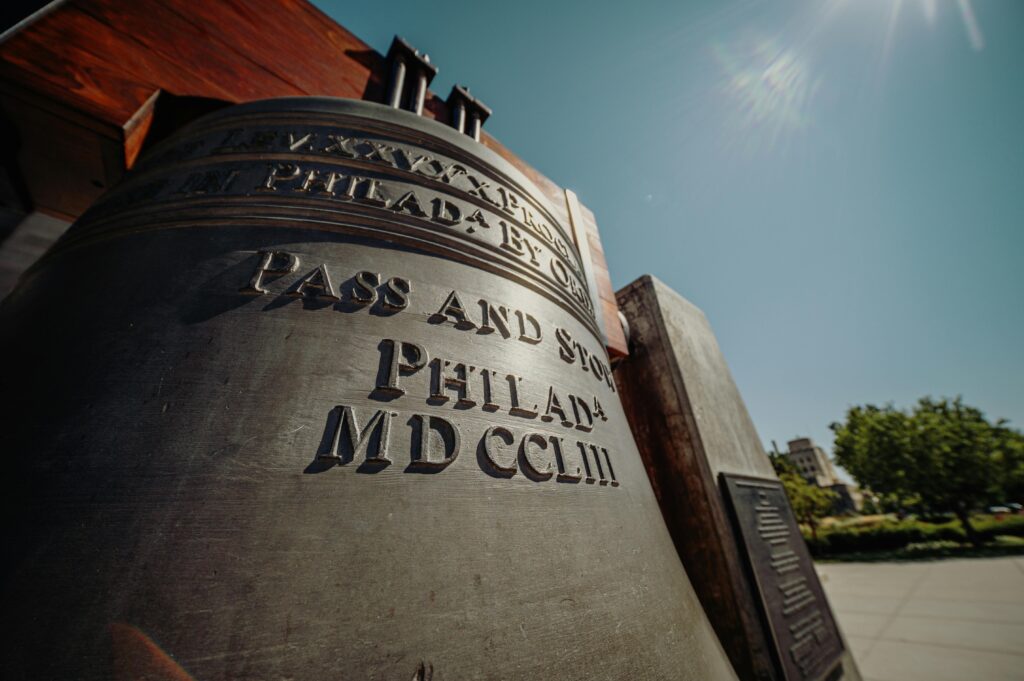
Just across the lawn sits the Liberty Bell Center. I’ve heard travelers say the bell is “just a piece of metal,” but they are missing the metaphor. To the solo traveler who has seen a few decades, the crack in the bell isn’t a flaw; it’s the story. It arrived in Philadelphia in 1752 and cracked during its very first strike. It was recast, used for decades, and eventually became a symbol for abolitionists, suffragists, and civil rights leaders.
We, too, carry the marks of our history. We have our own “cracks”—experiences that changed our trajectory or tested our mettle. Seeing the bell framed by the glass window with Independence Hall in the background is a moment of pure reflection. It suggests that something can be broken and yet remain more powerful than ever before.
Solo Traveler Tip: Timing the Crowd
Independence Hall requires timed tickets (except in January and February). For the best experience, book the first tour of the morning. You’ll beat the large tour groups and have a better chance of finding a quiet corner in the park afterward to journal your thoughts.
Christ Church and the Signers’ Final Rest
A short walk through the historic district brings you to Christ Church and its Burial Ground. This is where the men who signed the Declaration transitioned from rebels to legends. Seven signers are buried here, including Benjamin Franklin. His grave is usually covered in pennies—a tribute to his “a penny saved is a penny earned” philosophy.
Walking through the cemetery is a masterclass in perspective. It provides a sense of continuity that is particularly comforting when traveling alone. These figures are no longer abstract names in a textbook; they are neighbors in a quiet brick-walled garden. There is a peacefulness here that invites you to slow down. Sit on a bench, listen to the bells of Christ Church, and appreciate the fact that you are standing in a city that remembers its ancestors with such dignity.
The Museum of the American Revolution
If Independence Hall is the soul of 1776, this museum is the muscle. It’s one of the newer additions to the city, and it is spectacularly curated. For our demographic, the highlight is Washington’s War Tent. Full stop. The museum has a dedicated theater where the original tent—the very one he slept in throughout the campaign—is revealed behind glass.
Stand there for a moment. Let it land. The fragile linen makes the Revolution feel intensely personal. This wasn’t just about high-minded ideals. It was about men sleeping in the mud, away from their families, fueled by the hope of a document they had signed just across town. It’s a stirring end to a day of exploration—and a grounding reminder that the Declaration’s political philosophy came with a brutal price tag.
The Joy of the Solo Table
After a day immersed in the 18th century, Philadelphia’s modern culinary scene offers the perfect bridge back to the present. Solo dining in Philly is a delight, especially in the historic district. Whether it’s a quick bite at the Reading Terminal Market (a must-visit for the atmosphere alone) or a refined meal at a spot like The Olde Bar—located in the historic Old Original Bookbinder’s building—you’ll find that the city embraces the independent diner.
There is no shame in a table for one when you have the Declaration of Independence to chew on. You can spread out your map, review your photos, and plan your next move without compromise. In a city built on the idea of liberty, there is no greater liberty than the freedom to move at your own pace.
read alone, travel alone —
Ready to Go? Grab Your Guide.
Hour-by-hour itineraries built for independent travelers.
Free 48-hour guides, safety guides, and interactive maps — every city.
