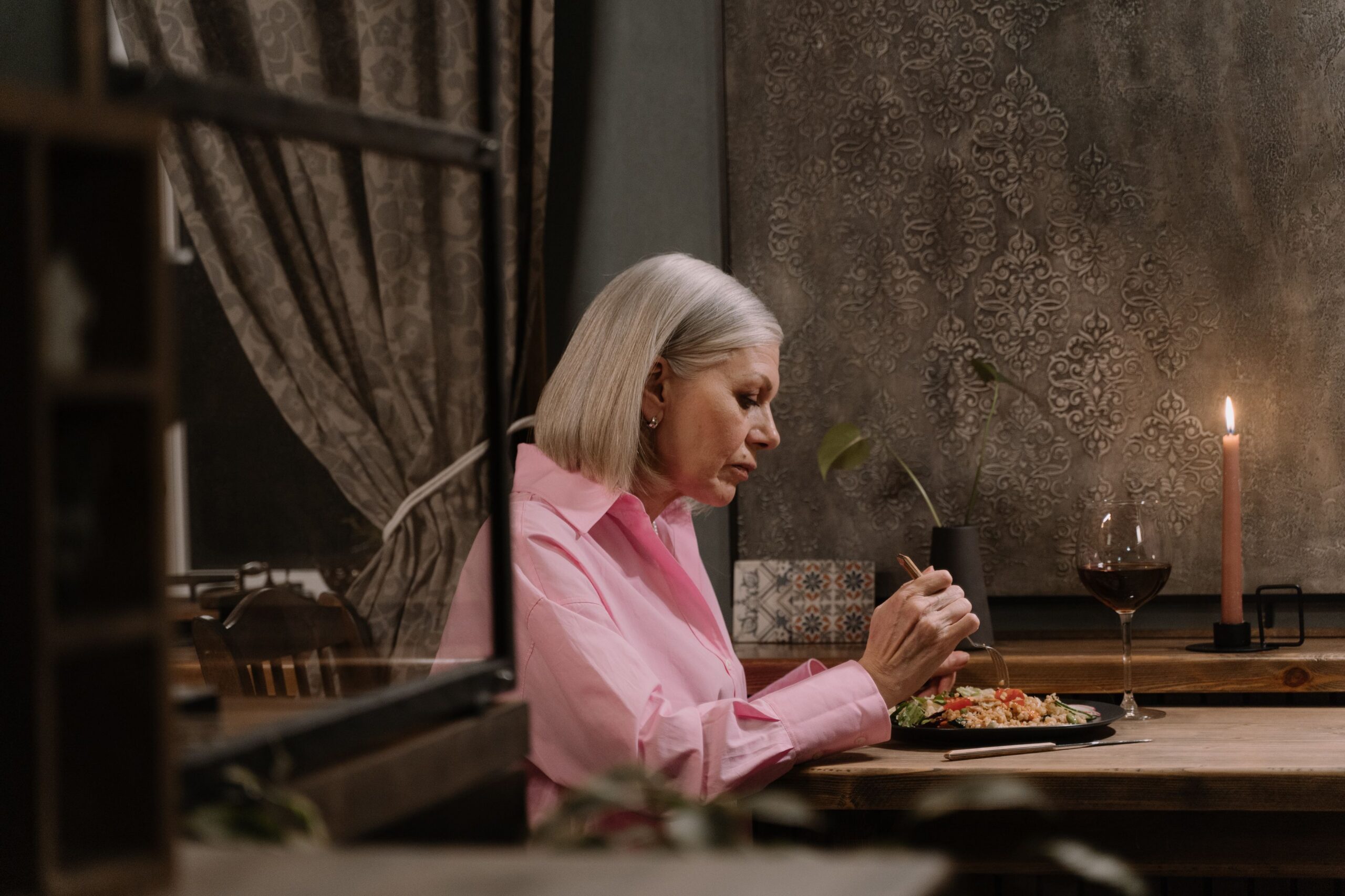
The hostess looks at you. Then past you, to check if someone is parking the car. Then back at you. You say it again: just one. And the math happens behind her eyes, the calculation of whether your single body produces enough revenue to justify that four-top by the window on a Saturday night in August.
Solo dining is one of the genuine pleasures of traveling alone, and one of the genuine friction points. You have complete control of the menu, the pace, and the conversation. You also have to get the table first. Here is how to do it without frustration.
Book Early, and Be Specific
The single most effective thing you can do is make a reservation and state upfront that you are dining alone. Do not leave it as a surprise for the host stand.
When you book online, select one guest and add a note in the special requests field: traveling solo, happy with counter or bar seating if available. This does two things. It signals that you are flexible, which makes you easier to accommodate. And it removes the awkward moment of the hostess realizing mid-seating that she has given a four-top to a party of one.
Some restaurants will not take solo reservations through standard booking platforms. Call directly. A brief phone call converts you from an ambiguous online booking to a specific person, and specific people are harder to turn away.
Go Early or Go Late
Peak season means peak hours. The window from 7pm to 9pm in most European cities and from 6:30pm to 8:30pm in most American ones is the hardest time to walk in alone and get a good table quickly.
Solo travelers have a structural advantage here that couples and groups do not: you can eat at 5:45pm or at 9:30pm without negotiating with anyone. Use it. Early seatings at excellent restaurants are often available when nothing else is. Late seatings at the bar are almost always an option if you are willing to wait.
Some of my best meals as a solo traveler have been at the bar at 10pm, when the dining room has turned over and the staff finally has time to talk.
Make Bar and Counter Seating Your Default
This is a genuine shift in perspective that changes everything. Stop thinking of bar or counter seating as the consolation prize for people who could not get a real table. It is frequently the best seat in the restaurant.
At the bar, you have access to the bartender, who usually knows more about the menu than the floor staff and is more likely to have time to talk through the options. You can see the kitchen if there is an open pass. You are in the social center of the room, not marooned at a two-top that was designed for conversation between two people.
In Japan, counter seating at a ramen bar or izakaya is not a fallback position. It is the intended experience. Adopt that frame and solo dining becomes easier immediately.
The Lunch Strategy
Peak season restaurants that are impossible at dinner are often available at lunch, sometimes at reduced prices, sometimes with the same kitchen doing the same food for a fraction of the crowd.
In Europe especially, lunch is treated seriously. A two-hour solo lunch at a proper restaurant with a glass of wine and a book is one of the underrated pleasures of traveling alone. You are not taking up a table that eight people need. You are participating in how the country actually eats.
If there is a restaurant on your list that feels like a stretch to get into for dinner, try it at lunch first. You will usually get in, and you might prefer it.
Learn the Phrases That Help
In any language, knowing how to say “just me, at the bar if you have it” turns a potential negotiation into a simple transaction. The staff stops calculating lost revenue and starts solving a straightforward logistics problem.
It also helps to know how to say “I am in no hurry” in the local language. This signals that you are not going to tie up the table and leave in forty-five minutes. A solo diner who is clearly planning to linger and order properly is a better customer than a couple who splits a starter and asks for the check.
Have Something to Do With Your Hands
This sounds small but it matters. A book, a journal, your phone with something you are genuinely reading, a notebook. The solo diner who is visibly occupied is comfortable. The solo diner who is staring at the room looks like someone who is waiting for someone, and that creates low-level social awkwardness for everyone.
I usually bring a small notebook and write about where I have been that day. It gives me something to do between courses and produces a record I actually use later. Whatever works for you, bring it.
Accept the Table You Are Given
In peak season, solo travelers do not get to be particular about which table. You get the corner two-top, the seat near the kitchen, the spot by the draft. Take it. You can always ask quietly if something opens up once you are inside and the staff has relaxed.
Declining a table because it is not the one you wanted is the fastest way to end up outside looking for somewhere else to eat at 8pm in July.
The Real Point
Solo dining in peak season is a negotiation, but it is a winnable one. The tools are simple: book early and honestly, arrive outside peak hours, default to the bar, eat lunch seriously, and be easy to accommodate.
The restaurants that will not seat a solo diner under any conditions are genuinely rare, and those are usually not the places you want to eat anyway. Most rooms want you there. They just need to figure out where to put you. Make that easy for them, and you will eat very well.
48-Hour City Guides
Ready to Go? Grab Your Guide.
Hour-by-hour itineraries built for independent travelers.
London, Paris, Vienna, Prague, Amsterdam and more — $7.99 each.
