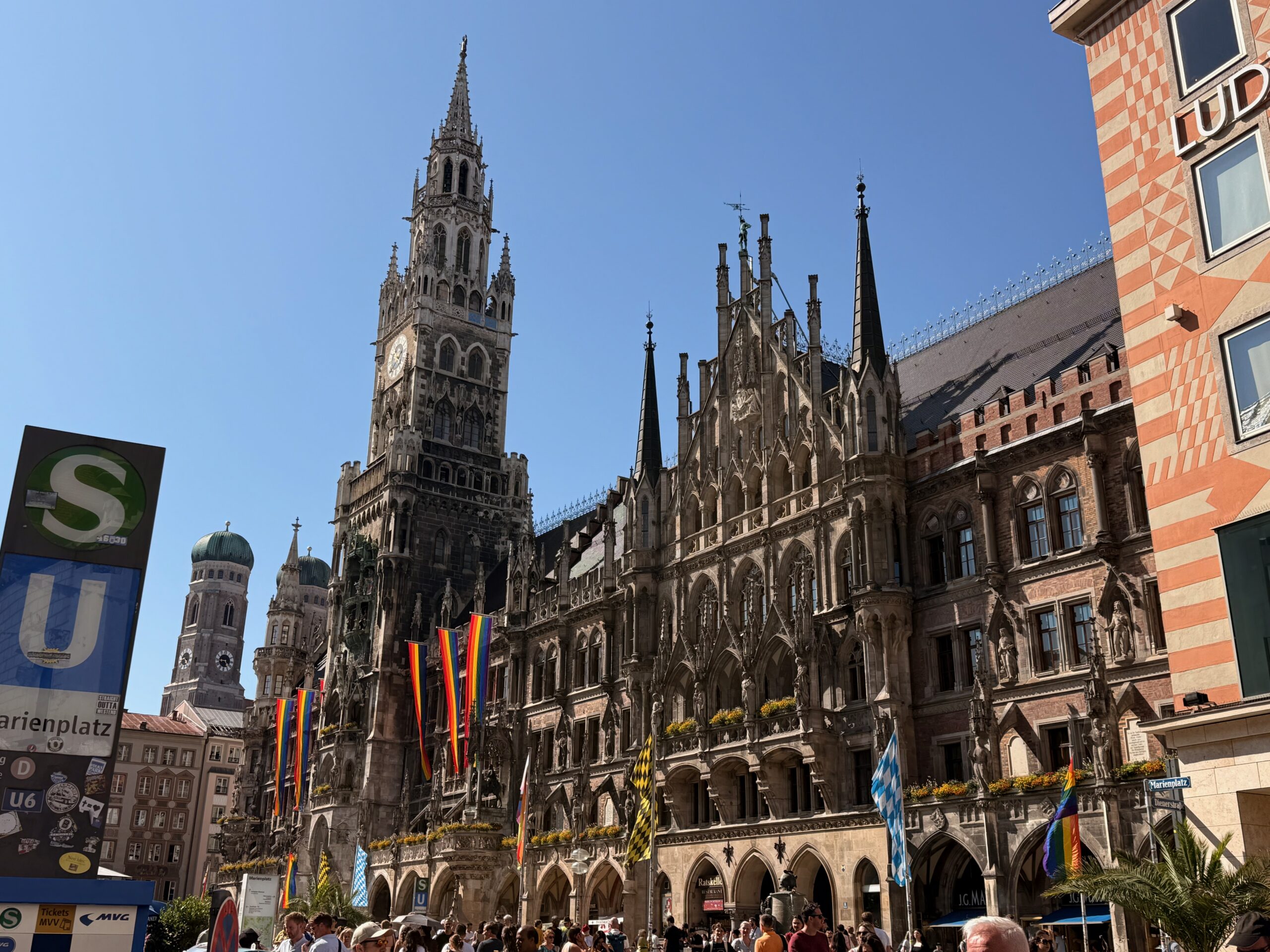
Munich is easy to reduce and harder to understand. The beer halls, steins, markets, and Alpine backdrop are real, but they sit beside royal ambition, world-class museums, postwar reinvention, and a public life built around lingering rather than rushing. For a solo traveler, that mix is exactly why Munich works: it gives you tradition without making you feel trapped by it.
The History of Munich: How It Became What It Is
Munich’s official history begins in 1158, when Henry the Lion founded the city on June 14, according to the City of Munich’s own historical timeline. That origin matters because Munich began with trade, movement, and control over routes near the Isar River rather than with the grand royal image visitors often associate with it today. The city grew into a market town, then a ducal seat, then the political and cultural heart of Bavaria. By 1255, Munich had become the royal seat of the House of Wittelsbach, the dynasty that would shape the city for centuries.
The Market Town That Became a Capital
Munich’s earliest importance came from its position. The city grew near the Isar and became tied to trade routes, particularly the salt trade that helped medieval towns become wealthy and politically useful. That commercial beginning still explains part of Munich’s character. For all its later grandeur, the city has never fully lost its market-town practicality. Public squares, food markets, beer halls, and neighborhood life still matter here because Munich’s identity was never only courtly. It was civic, social, and deeply local before it became royal.
The Wittelsbach City
The Wittelsbachs gave Munich its dynastic weight. The Munich Residence served as the seat of government and residence of Bavarian dukes, electors, and kings from 1508 to 1918, growing from a 1385 castle into one of Europe’s great palace complexes. The Residenz is not simply a royal building; it is Munich’s political self-image in stone. Its scale explains why the city can feel both provincial and grand. Munich was never Berlin, Paris, or Vienna, yet Bavaria’s rulers built as though their capital deserved to stand among Europe’s great cultural centers.
War, Memory, and the Modern City
Munich’s 20th century carries far darker weight. The city was central to the rise of National Socialism, and modern Munich cannot be understood without acknowledging that history. After World War II, the city rebuilt, but it also had to remake its image. The 1972 Olympic Park became part of that postwar story: a major architectural and civic project meant to present a modern, open, democratic Germany, though the Games were also marked by the terrorist attack against Israeli athletes. That tension remains part of Munich’s character: beauty, order, confidence, memory, and responsibility all sharing the same civic space.
What Makes Munich Distinct: Character, Culture & the Solo Experience
Munich’s character comes from a rare balance: traditional but not frozen, wealthy but still local, polished but not sterile. The city takes Bavarian identity seriously, but not only for visitors. Beer gardens, markets, public parks, museums, and neighborhood squares are not decorative extras. They are part of how Munich lives.
The beer garden is the clearest example. Bavaria’s official tourism site describes the Biergarten as an important piece of Bavarian life, and Munich’s own travel guidance notes that beer is traditionally served in a one-litre Maß in beer gardens. For solo travelers, that culture matters because communal seating makes being alone feel natural. You are not hidden at a table for one; you are part of the room, even before anyone speaks.
Munich also has a calmer intellectual side that many visitors miss. Maxvorstadt, the Pinakotheken, university life, and the city’s museum culture give Munich a serious cultural depth beyond its festive reputation. The result is a city that rewards two moods at once: appetite and attention.
Places That Tell Munich’s Story
Marienplatz: Marienplatz is the historic heart of the city and still functions as Munich’s central civic stage. It tells the story of Munich as a city built around public life: markets, ceremonies, crowds, politics, and everyday orientation.
The Munich Residenz: The Residenz was the seat of Bavarian rulers for centuries and remains one of the clearest expressions of Wittelsbach power. It tells you that Munich’s grandeur was not accidental; it was built deliberately by a dynasty that wanted Bavaria to be seen, respected, and remembered.
Frauenkirche: The Church of Our Lady was consecrated in 1494 and remains Munich’s most famous landmark, according to the city’s historical timeline. Its twin towers define the skyline and tell the story of a city whose spiritual and civic identity grew together.
The English Garden: Opened to the public in 1789, the English Garden is one of Munich’s great civic gifts. Its scale, informality, and public use reveal a city that values outdoor life, leisure, and social ease as much as architecture.
The Alte Pinakothek: The Alte Pinakothek is one of Munich’s great art institutions and part of the museum culture that gives the city intellectual weight. It tells a different Munich story: not beer-hall spectacle, but serious collecting, European painting, and a long tradition of cultural ambition.
Olympiapark: Built for the 1972 Summer Olympics, Olympiapark represents Munich’s postwar reinvention through architecture, landscape, and public space. It tells the story of a city trying to project openness and modernity while carrying the unresolved burdens of the 20th century.
Why Munich Rewards the Solo Traveler
Munich rewards solo travelers because it makes public life easy to enter. A beer garden bench, a museum room, a park path, a market stall, or a neighborhood café can all hold one person comfortably. You do not need a group to access the city’s rhythm.
There is also a useful clarity to Munich. It is large enough to offer depth, but orderly enough to feel manageable. The city lets you move between royal history, green space, art, food culture, and modern neighborhoods without the emotional exhaustion of a larger capital. Solo travelers often see Munich better than groups do because they are free to slow down — and Munich is at its best when nobody is rushing it.
48 HOURS IN MUNICH — THE GUIDE
This article gives you the context. The guide turns that context into a real trip, with an hour-by-hour sequence, beer garden strategy, exact restaurant picks with prices, museum timing, neighborhood flow, transport tips, and insider moves designed specifically for solo travelers.
Ready to Go?
Munich is best approached with patience, curiosity, and enough room in the day to let the city stretch out. Let the museums hold you longer than planned, let the park slow you down, and let the local rituals do their work.
Browse all the 48-Hour Guides today— 12 European cities and counting.
48-Hour City Guides
Ready to Go? Grab Your Guide.
Hour-by-hour itineraries built for independent travelers.
London, Paris, Vienna, Prague, Amsterdam and more — $7.99 each.
