Certain European cities buckle under peak-season tourism. Between June and August, historic stone corridors become human gridlock, restaurant staff are overworked, and local life disappears beneath commercial souvenir stands.
When the summer rush recedes, these same destinations reclaim their dignity.
If you travel solo and value space, quiet contemplation, and spontaneous access to world-class art and culture, these eight cities are not just tolerable in the off-season—they are infinitely superior.
1. Florence, Italy
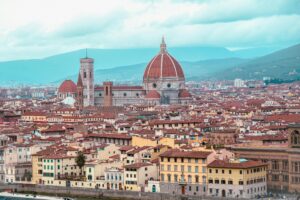
In July, Florence feels like an open-air theme park. Navigating the Piazza del Duomo requires dodging selfie sticks, and standing before Botticelli’s The Birth of Venus in the Uffizi means peering over four rows of tour groups.
Visit Florence in November or January, and the city reverts to its true Renaissance self.
-
The Reality: You can walk directly up to the ticket window at the Bargello or the Basilica di Santa Croce without a reservation.
-
The Atmosphere: The Arno River reflects crisp winter light, and the aroma of roasted chestnuts and ribollita drifts from neighborhood trattorias in the San Frediano district.
-
Solo Strategy: Grab a seat at an enoteca counter near the Mercato di Sant’Ambrogio. Order a glass of Chianti Classico and a plate of crostini toscani alongside locals taking their lunch breaks.
2. Dubrovnik, Croatia
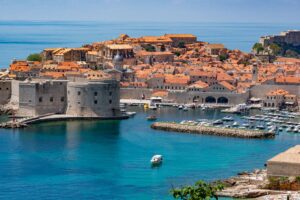
Dubrovnik’s Old Town is essentially an open-air limestone fortress. In summer, multiple mega-cruise ships dock simultaneously. As a result, they funnel up to 10,000 visitors at once through the narrow Pile Gate into 95-degree heat.
By late October, the cruise ships depart, leaving the Stradun nearly empty at dusk.
-
The Reality: Walking the two-kilometer circuit of the medieval city walls in November feels almost private. The Adriatic Sea crashes against the stone ramparts below, with no drone buzzing overhead.
-
What to Watch: Many resort-focused restaurants and boat tours shut down after the first week of November.
-
Solo Strategy: Stay inside the city walls. Eat at family-run konobas like Konoba Menur that stay open year-round, serving fresh grilled fish, squid ink risotto, and local Dingač red wine.
3. Seville, Spain
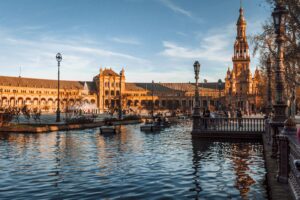
Visiting Seville in July or August is an endurance test. Temperatures regularly exceed 105°F (40°C), forcing visitors indoors between noon and 7:00 PM.
From late October through February, Seville features comfortable daytime temperatures hovering between 60°F and 68°F.
-
The Reality: You can stroll through the Real Alcázar gardens and marvel at Mudéjar plasterwork without wiping sweat from your eyes. By December, the orange trees lining the Santa Cruz neighborhood are heavy with fruit.
-
The Atmosphere: Tapas culture in the Triana neighborhood moves at its own pace.
-
Solo Strategy: Stand at El Rinconcillo’s historic bar (founded in 1670) and order slices of Jamón Ibérico de Bellota alongside an ice-cold glass of manzanilla sherry.
4. Amsterdam, Netherlands
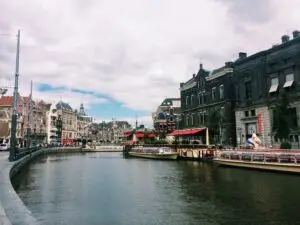
Amsterdam’s canal belt sees extreme summer pedestrian congestion, especially around the Red Light District and Museumplein.
When late autumn and winter settle in, the city embraces gezelligheid—the unique Dutch concept of cozy, warm conviviality.
-
The Reality: The Rijksmuseum, Van Gogh Museum, and Anne Frank House become accessible spaces of reflection rather than crowded transit hubs.
-
The Atmosphere: Early evening brings the glow of street lamps reflecting off quiet canal water. Historic brown cafés (bruin cafés) with dark wood paneling and Persian rugs on tables And flickering candles invite you in for draft beer and hot bitterballen.
-
Solo Strategy: Rent a sturdy upright Dutch bike only if you are confident on slick pavement; otherwise, explore the Jordaan neighborhood entirely on foot, browsing antiquarian bookshops and art galleries.
5. Edinburgh, Scotland
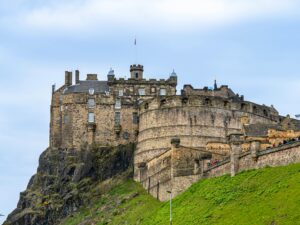
Edinburgh’s Gothic architecture was never designed for blinding sunshine; it was made for mist, low clouds, and moody skies. Outside of the August Festival fringe frenzy, Edinburgh’s soul comes alive in late autumn.
-
The Reality: On a brisk November morning, climb Arthur’s Seat or the Salisbury Crags for panoramic views of the Firth of Forth without crowds. The Royal Mile becomes a walkable, historic thoroughfare again.
-
The Atmosphere: Edinburgh is a city of historic pubs, open peat fires, independent bookstores, and world-class free national galleries.
-
Solo Strategy: Spend an afternoon exploring the Scottish National Gallery on The Mound, then retreat to a historic pub in the New Town like The Cumberland Bar or The Abbotsford for a single malt Scotch and a quiet corner to read.
6. Vienna, Austria
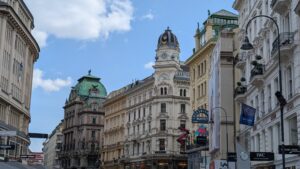
Vienna carries an imperial elegance that peaks as the temperature drops. From mid-November through December, the city hosts historic Christmas markets. However, even in the deep winter months of January and February, Vienna is an unrivaled cultural sanctuary.
-
The Reality: The Kunsthistorisches Museum and the Albertina provide immense galleries where you can view masterpieces by Bruegel and Dürer in near silence.
-
The Atmosphere: The legendary Viennese coffee house culture (Kaffeehauskultur) was explicitly designed for solo visitors. Sitting alone for two hours with a Melange, a slice of Sachertorte, and a newspaper is a time-honored tradition.
-
Solo Strategy: Book a standing-room or single parterre ticket at the Vienna State Opera (Wiener Staatsoper). You can experience world-class opera for under €15 with no stress about booking in advance.
7. Bruges, Belgium
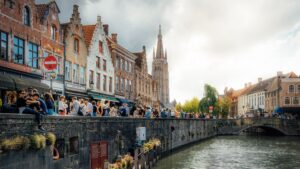
In summer, Bruges fills with thousands of day-trippers bused in from Brussels and cruise ports in Zeebrugge. By 2:00 PM, the Market Square feels overwhelming.
In winter, once the day-trippers leave at 4:00 PM, the medieval town falls into absolute stillness.
-
The Reality: Swans drift along the misty Dijver canal under quiet stone bridges. The cobblestones glisten under yellow streetlights, creating an authentic 15th-century atmosphere.
-
The Atmosphere: Flemish stews (carbonnade flamande) simmered with dark abbey beer, artisan chocolate shops, and cozy cellar tasting rooms welcome independent travelers.
-
Solo Strategy: Visit the Groeningemuseum to see Early Netherlandish art up close, then spend the evening at ’t Brugs Beertje, a legendary beer house serving over 300 Belgian brews with expert guidance from the bar staff.
8. Lisbon, Portugal
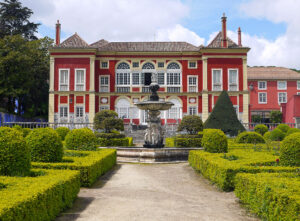
Summer in Lisbon brings steep, sun-baked hills and hour-long lines for the iconic Tram 28 and Pasteis de Belém.
Between November and February, Lisbon enjoys mild Atlantic breezes, blue skies, and comfortable walking temperatures around 58°F to 63°F.
-
The Reality: The steep cobblestone streets (calçada portuguesa) of the Alfama, Mouraria, and Bairro Alto become navigable without exhaustion. Miradouros (scenic viewpoints) offer panoramic views of the Tagus River, with benches for sitting.
-
The Atmosphere: Fado music takes on its true melancholic weight (saudade) in intimate, dimly lit taverns rather than tourist-heavy dinner shows.
-
Solo Strategy: Head to a neighborhood taberna in Mouraria, grab a small table, order bacalhau à brás (salt cod with scrambled eggs and potatoes) and a glass of Vinho Verde, and listen to authentic acoustic Fado after 9:00 PM.
Read alone, travel alone
Ready to go? Grab your guide.
Hour-by-hour itineraries built for independent travelers. Every city comes with a free 48-hour guide, an interactive map, and a pocket guide to take with you.
Browse City Guides →